.
Published by Fotography.ae | Written by Mashhood Arshad Corporate & Event Photographer, 6+ Years Across UAE & GCC
1. What Is Event Photography and Videography? A Complete Definition
Event photography is the professional capture of corporate and business events producing still images that document, communicate, and represent the event for organizational, PR, marketing, and internal use.
Event videography is the professional video production of the same capturing footage that is edited into narrative-driven content, highlight reels, full-session recordings, or social media assets.
Together, they form a branch of business visual production that operates under completely different conditions from studio or office photography. Events are live, unpredictable, fast-moving environments where lighting changes constantly, people move without instruction, and the most important moments occur once with no possibility of a retake.
What Event Photography and Videography Covers
| Category | Examples |
| Conferences and summits | Keynote addresses, panel discussions, breakout sessions |
| Award ceremonies | Trophy presentations, recipient reactions, stage moments |
| Product launches | Reveal moments, demonstration setups, press interactions |
| Corporate dinners and galas | Venue ambience, networking, leadership interactions |
| Team and company celebrations | Annual functions, milestone events, team days |
| Trade shows and exhibitions | Booth setups, client interactions, branded environments |
| Seminars and training sessions | Speaker moments, attendee engagement, workshop activities |
| AGMs and shareholder meetings | Executive presentations, formal proceedings |
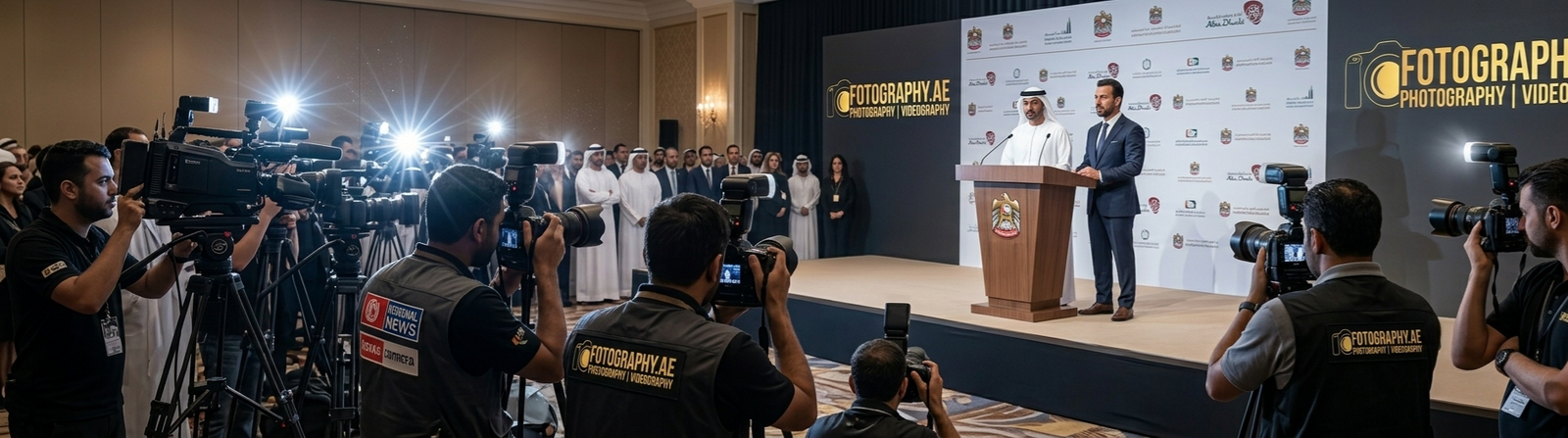
| Press conferences | Speaker setups, media wall moments, Q&A sessions |
| Government and institutional events | Protocol-driven proceedings, VIP coverage, ceremonial moments |
Where Event Visual Assets Are Used
- Press releases and media submissions
- Company website news and event pages
- LinkedIn and social media posts (during and after the event)
- Internal event recaps and communications
- Investor and board reports
- Sponsor deliverables and activation reports
- Event recap videos for future promotion
- Award submission documentation
- Speaker and participant portfolios
Key distinction: Event photography is not just documentation. It is the primary tool by which organizations communicate that their events happened, that they mattered, and that the people involved are worth following. Every image is a reputation signal.
2. Why Events Require a Different Visual Strategy Than Other Business Shoots
Corporate headshots, office photography, and lifestyle shoots are all controlled environments. The photographer sets up the lighting, positions the subject, and takes the shot under defined conditions.
Events are the opposite of controlled environments.
The Core Challenges of Event Photography
Lighting is unpredictable and often hostile.
Conference venues in Dubai, Abu Dhabi, and across GCC typically combine high overhead spotlights on stage with low ambient lighting in the audience area. This creates a two-stop or more exposure difference between the speaker and the room requiring real-time technical adaptation shot by shot.
Moments happen once and do not repeat.
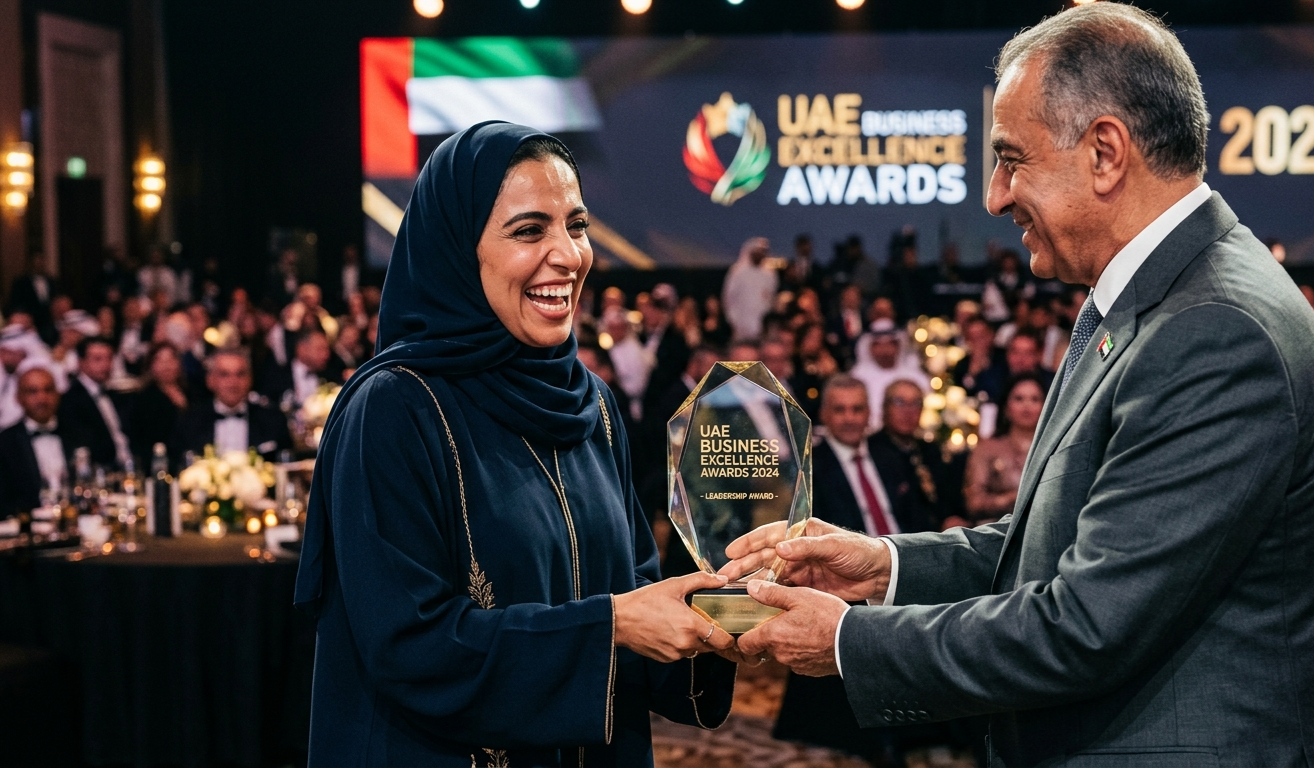
A trophy handoff, a CEO’s expression during applause, a genuine networking laugh these occur in fractions of a second. Unlike office photography, there is no “let’s try that again.” A missed moment is gone permanently.
People move constantly and unpredictably.
Speakers move across stages. Panelists shift in their seats. Audience members look away. Event photography requires constant anticipation reading the room before it happens, not reacting after.
Access and protocol create constraints.
Many corporate events particularly in government, finance, and luxury hospitality sectors across the UAE and GCC, have strict protocols about where photographers can stand, which moments can be captured, and which individuals can appear on camera. These constraints must be understood before the event begins, not discovered during it.
Time pressure is absolute.
For events with press deadlines, social media requirements, or same-day marketing distribution, the turnaround between capture and delivery may be hours, not days. This is a fundamentally different production model.
Why This Matters for Planning
Because event photography is reactive rather than controlled, the quality of planning determines the quality of outcomes far more than in any other type of business shoot. A poorly planned event shoot will fail regardless of the photographer’s technical skill. A well-planned shoot gives a skilled photographer the framework to operate decisively and efficiently under live conditions.
Types of Corporate Events That Require Professional Coverage
Different event formats have different coverage requirements, key moments, and delivery expectations. Understanding the format is the first step in planning the right visual strategy.
Conferences and Industry Summits
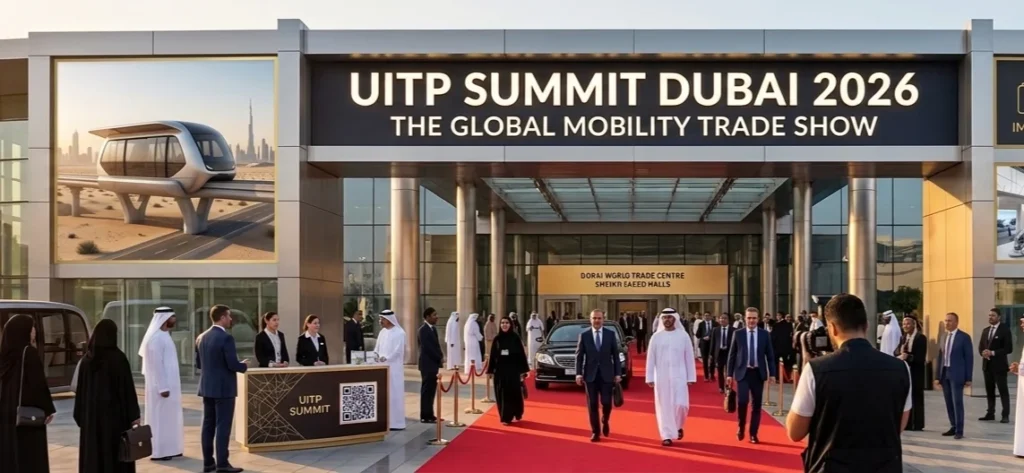
These are the most common large-scale corporate event types in the UAE and GCC, particularly in Dubai’s conference and exhibition ecosystem (DWTC, DIFC, Madinat Jumeirah, and hotels across the Emirates).
Key moments to capture:
- Pre-event atmosphere and registration
- Keynote speaker on stage (wide, medium, and close-up angles)
- Audience engagement shots
- Panel discussions with full panel and individual panelist moments
- Q&A interactions
- Networking sessions between sessions
- Sponsor brand visibility
- Closing ceremony
Typical deliverable: 200–500 edited images per day; highlight reel video (1–3 minutes) for day-after distribution.
Award Ceremonies
Awards events are among the most demanding to photograph because the highest-value moments (the award presentation itself) are extremely brief and happen in low-contrast, high-spotlight conditions.
Key moments to capture:
- Stage setup and branded backdrop before guests arrive
- Guest arrivals and registration
- Dinner or pre-ceremony networking
- Each award announcement (wide + close simultaneously if two photographers)
- The exact moment of trophy handoff
- Recipient reaction and facial expression
- Stage group photo with all award recipients
- After-ceremony celebrations
Critical requirement: The photographer must receive the full awards list and run-of-show in advance to anticipate every presentation moment not be surprised by them.
Product Launches
Product launches combine event coverage with commercial photography requiring attention to both human moments and product detail.
Key moments to capture:
- Reveal moment (if staged as a surprise or theatrical unveiling)
- Product on display (detail shots, branding shots, lifestyle shots)
- Presenter and product together
- Media and press photographing the product (meta-coverage)
- CEO or spokesperson with product
- Guest and VIP interactions with the product
- Sponsor and partner branding
Note: Product launch photography often requires post-production of both people imagery (event style) and product imagery (commercial style) these may require different editing treatments.
Corporate Dinners and Gala Events
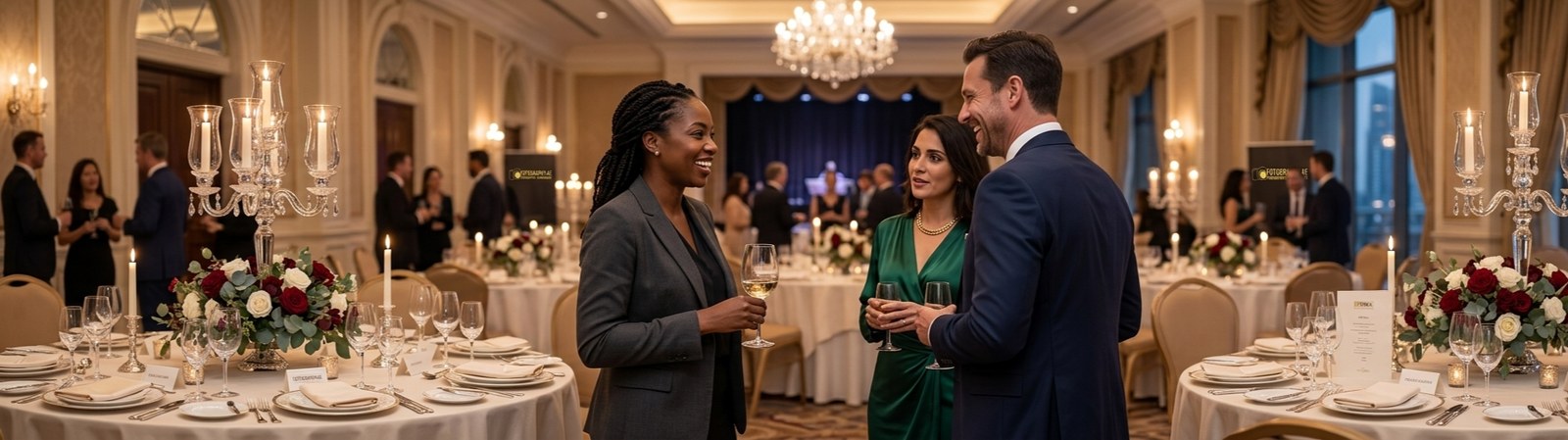
Galas and corporate dinners are social events with a high emphasis on atmosphere, relationships, and brand representation.
Key moments to capture:
- Venue styling and table setups before guests arrive
- Arrival and welcome moments
- Leadership and VIP table interactions
- Entertainment moments (if speakers, performers, or presentations)
- Award or recognition moments if included
- Candid networking and conversation moments
- Group photos of key tables or departments
Key challenge: Dinner lighting is designed for atmosphere, not photography. Candlelight, dim overhead fixtures, and coloured ambient lighting create extreme technical challenges. Experienced event photographers in UAE know how to work in these conditions without ruining the atmosphere with harsh flash.
Trade Shows and Exhibitions
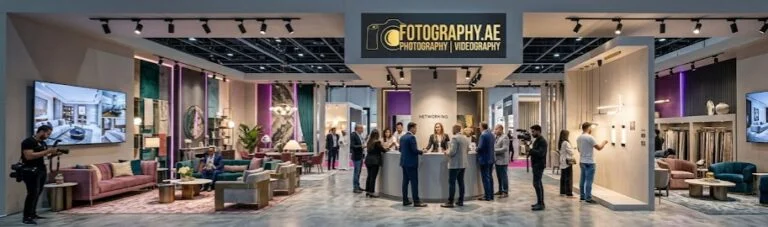
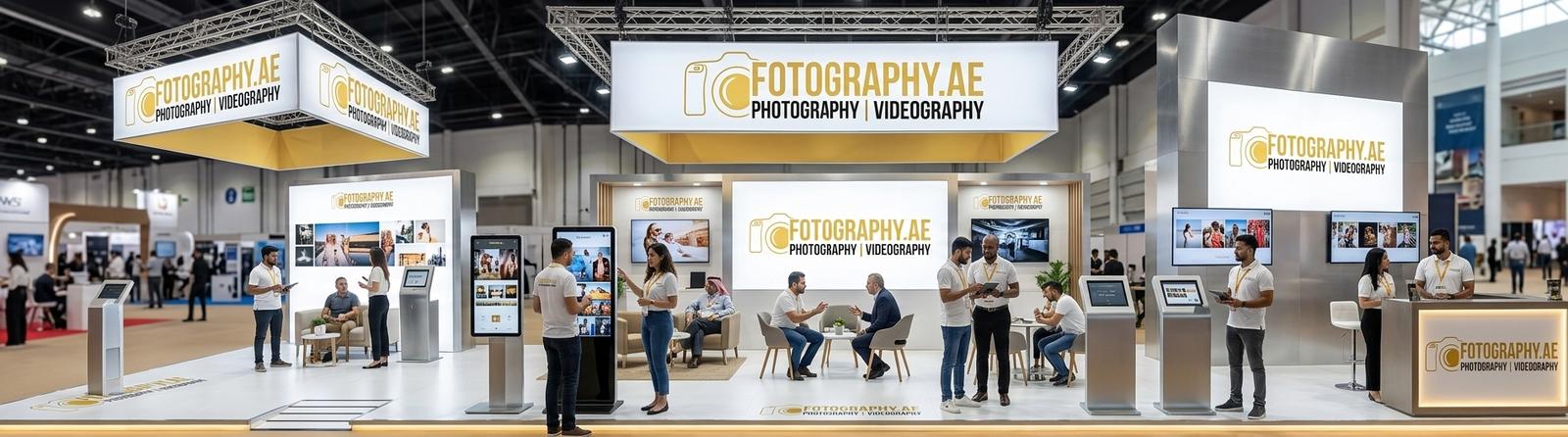
Exhibition coverage requires both the physical setup (booth and branded environment) and live interaction coverage (conversations, demonstrations, client engagement).
Key moments to capture:
- Booth setup and branding (before the hall opens)
- Team at the booth in active positions
- Client and visitor interactions at the booth
- Any live demonstrations or presentations
- Signage and branded installations
- Company leadership at the booth
- Networking conversations in adjacent areas
Timing note: The best booth shots are taken immediately when doors open before the hall gets crowded and cluttered with competing visual noise.
Press Conferences
Press conferences in UAE and GCC particularly in sectors like real estate, government, and financial services have very specific protocol requirements.
Key moments to capture:
- Stage setup with branded media wall or backdrop
- Speaker panel arrival and seating
- Official opening statements
- Q&A session dynamics
- Document signings or MOU moments if included
- Media and camera crew presence (for meta-coverage)
- Post-conference bilateral meetings or photo calls
Protocol note: Press conferences often include government officials or senior executives with specific access protocols. Confirm with the communications team which individuals can be photographed and under what conditions.
Government and Institutional Events
Events involving government entities, semi-government bodies, or public institutions in UAE including Abu Dhabi, Dubai, Sharjah, and across GCC operate under specific visual and protocol frameworks.
Key considerations:
- Confirm photography permissions for all attendees, particularly senior officials
- Understand the order of precedence for VIP coverage
- Ensure images comply with local media and communications laws
- Confirm whether media releases require approval before publication
- Some events require accredited press credentials or venue permits
Photography.ae has extensive experience navigating these requirements across UAE and GCC institutional events.
4. The Priority-First Approach: Strategy Over Volume
The most common instruction given to event photographers is: “Just cover everything.”
This instruction produces the worst outcomes.
Why “Cover Everything” Fails
When there is no priority system, photographers spread attention uniformly across an event. The result is a large volume of images mostly of generic room shots, backs of heads, and empty corridors with inadequate coverage of the moments that actually matter.
The client receives 600 images. The marketing team can use 12.
The Priority-First Framework
A professional event shoot operates from a priority hierarchy established before the event begins:
Priority 1 Non-negotiable moments
These must be captured regardless of position, lighting, or concurrent activity. Missing any of these is a production failure.
Examples: The keynote speaker’s opening moment, the award handoff, the CEO’s remarks, the product reveal.
Priority 2 High-value moments
These should be captured if position permits. They form the bulk of usable assets.
Examples: Panel discussions, networking key attendees, sponsor integration moments, audience engagement.
Priority 3 Supplementary coverage
These are captured when priorities 1 and 2 are secured and time permits.
Examples: Venue ambience, food and catering (if branded), general networking crowd shots, environmental details.
Priority 4 Opportunistic moments
These are captured only when they occur organically without disrupting higher-priority coverage.
Examples: Genuine emotional reactions, candid leadership interactions, unexpected meaningful moments.
This hierarchy means that when two important things happen simultaneously which they always do at events the photographer knows exactly which to prioritize without needing to ask the client.
How to Build a Shot List for Any Corporate Event
A shot list is the single most important planning document for event photography. It takes 30–60 minutes to build and prevents hours of reshoot conversations or missed-asset regrets.
What a Shot List Is (and Isn’t)
A shot list is not a rigid script. Events are live and unpredictable. A shot list is a prioritized reference document that the photographer uses to track what has been captured and what still needs to be captured while remaining adaptive to live conditions.
Shot List Template for Corporate Events
Section 1: Venue and Environment
- Venue exterior (if client-branded)
- Event entrance and registration area
- Main hall or auditorium before guests arrive
- Stage and backdrop with full branding visible
- Specific branded installations (sponsor walls, product displays, media backdrops)
- Catering and hospitality areas (if branded)
Section 2: People Pre-Event
- Organizer and team (group shot before event opens)
- VIP arrivals (list names in advance)
- Speaker and presenter arrivals
- Registration desk interactions
Section 3: Programme Moments by time in run-of-show
- keynote opening (wide), mid-speech (medium), expression (close)
- Panel: full panel wide, individual panelists, moderator
- Award: announcement moment, handoff, recipient expression
- [Specific moment per programme item] repeat for each item
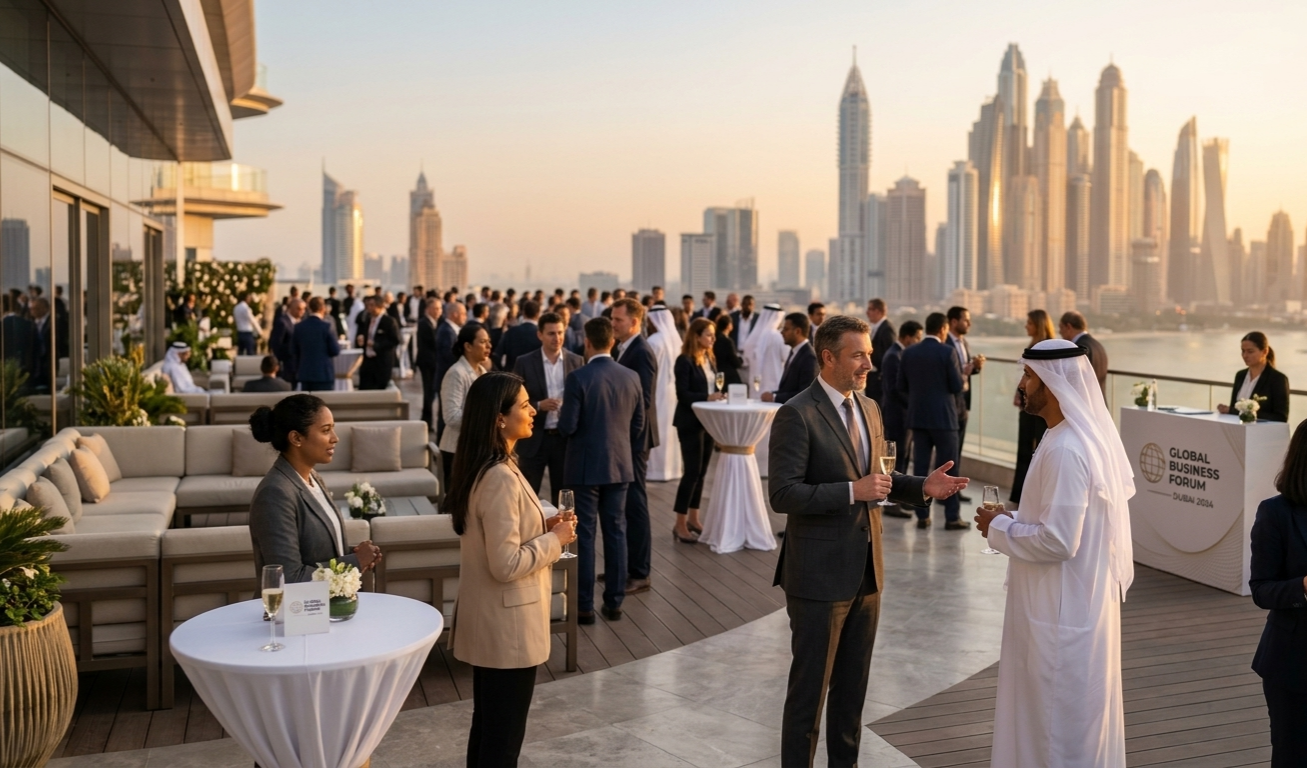
Section 4: Audience and Networking
- Audience wide shot during keynote
- Specific VIP or key attendee networking moments (names from VIP list)
- Sponsored networking area
- Break-time crowd engagement
Section 5: Post-Event
- Group photo: full team/speakers on stage
- Leadership informal close-out moments
- Award winner group photo
- Venue after guests depart (if needed for recap)
How to Distribute the Shot List
The shot list is shared with three parties:
- The photographer primary working reference
- The event coordinator so they can alert the photographer to upcoming moments
- The client’s communications or PR team for alignment on PR priorities
A shot list is a coordination tool, not just a creative brief.
Event Photography Planning: The Complete Pre-Production System
Professional event photography begins 1–3 weeks before the event day, not the morning of.
What Pre-Production Covers
Week 3–4 before the event:
- Project brief confirmed (objectives, audience, usage, key deliverables)
- Run-of-show document obtained
- Shot list first draft created
- VIP list obtained with photos and titles
- Sponsor requirements reviewed
- Photographer confirmed and booked
- Venue access and accreditation organized
Week 1–2 before the event:
- Shot list finalized and approved
- Any photography restrictions confirmed with venue
- Permit requirements confirmed (certain venues and free zones in Dubai require permits)
- Equipment plan finalized based on venue lighting assessment
- Backup equipment confirmed
- Coordination contact on event day assigned
- Delivery timeline and format requirements confirmed in writing
48 hours before:
- Run-of-show reviewed for any updates
- VIP list confirmed for final changes
- Accreditation and access passes confirmed
- Any confidential or restricted moments flagged
- Social media delivery requirements confirmed (if live or same-day posting is required)
The Pre-Event Venue Assessment
For large events, a pre-event venue visit is recommended. This allows the photographer to:
- Assess ambient lighting levels and colour temperature at the stage
- Identify optimal shooting positions for each programme segment
- Note any access restrictions (restricted press areas, protocol zones)
- Plan equipment (which lenses, whether flash is permitted, whether a second body is needed)
- Identify the coordination contact and communication method on event day
In UAE and GCC hotel venues common event locations across Dubai, Abu Dhabi, and Riyadh lighting conditions vary significantly between ballrooms. A pre-event assessment prevents technical surprises on the day.
-
On-Site Event Photography: What Happens During Production
Understanding what happens on an event production day helps clients coordinate effectively and set realistic expectations.
The Event Day Timeline
60–90 minutes before doors open:
- Photographer arrives and conducts final venue assessment
- Stage, backdrop, and branded installations are photographed before crowds arrive (these are often the cleanest, most usable environment shots)
- Equipment tested and calibrated under actual venue lighting
- Coordination contact identified and briefed on shot list priorities
- Camera positions for main programme moments confirmed
Guest arrival and registration (if covered):
- Registration desk and welcome moments captured
- VIP arrivals captured based on VIP list
- Networking atmosphere shots established
During the programme:
- Photographer moves between priority positions as defined by the run-of-show
- Periodic shot list check to confirm key moments are secured
- Real-time adjustment of settings as lighting conditions change (spotlight levels, ambient shifts)
- Coordination with event staff for stage access if required
Break periods:
- Networking coverage
- Sponsored area coverage
- Opportunity shots (candid leadership interactions)
- Quick shot list review to identify any gaps
Closing and post-event:
- Closing programme moments
- Group photos (must be scheduled, not improvised)
- Award winner or leadership group shots
- Environmental wrap shots
What to Expect During Production
Photographers should not be interrupted for non-urgent requests during active programme moments. This is the most critical period. A tap on the shoulder to ask about a deliverable format during a keynote causes a missed shot.
Establish a signal or message channel for event-day communication ideally via a designated coordinator who tracks the shot list independently and communicates with the photographer during breaks.
Group photos require dedicated scheduling they do not happen organically. Every group photo (award winners, speakers, leadership team) needs 5 minutes allocated in the run-of-show with the event coordinator gathering the relevant people.
-
Event Videography: How Video Coverage Differs from Photography
Event videography and event photography serve different communication goals, operate under different technical constraints, and produce fundamentally different assets.
Understanding these differences helps organizations plan and budget correctly.
The Core Difference in Purpose
Event photography
produces a library of still assets for use across multiple channels over an extended period website news sections, social media posts, PR, board reports, investor materials.
Event videography
produces a time-based narrative, a highlight reel, a session recording, or a brand film that communicates emotion, energy, and story in a way still images cannot. It has a shorter reuse window but higher emotional impact per view.
Key Operational Differences
| Factor | Photography | Videography |
| Equipment profile | Camera + lenses (relatively mobile) | Camera + lenses + audio + stabilizer + tripod (less mobile) |
| Position flexibility | High — photographer moves throughout | Lower — camera operators need stable positions |
| Post-production time | 3–7 days | 2–4 weeks |
| Asset shelf life | 12–36 months | 6–18 months |
| Technical audio requirement | None | Critical — bad audio makes unusable video |
| Live delivery possibility | Yes (same-day social media selects) | Rarely — raw footage is not the deliverable |
| Number of operators needed | 1–2 photographers | 1–4 videographers depending on scale |
Audio: The Most Underestimated Element of Event Videography
In UAE and GCC event environments, audio is the most commonly underplanned element of event video production and the one that most often compromises the final product.
Sources of audio for corporate event videos:
Direct feed from AV system: The cleanest source. Requires pre-coordination with the event’s AV team to obtain a line-out connection before the event day. This is non-negotiable for any event where speaker audio quality matters.
Lavalier microphone on key speakers: Used when AV feed is unavailable or for supplementary close-capture. Requires physical placement before the speaker takes the stage.
Directional (shotgun) microphone on camera: Acceptable for ambient room audio. Not suitable as a primary speech recording source.
Never rely on the camera’s built-in microphone for speech recording at events. In a room of any size, this produces unusable results.
Coordinate with the event AV team at least 72 hours before the event to confirm audio feed availability and connection type.
-
The Corporate Event Videography Workflow
Event videography follows a defined three-phase production workflow. Understanding each phase helps clients manage expectations and plan effectively.
Phase 1: Pre-Production (1–3 Weeks Before Event)
Pre-production for event video is different from scripted brand video it adapts to a live, unscripted environment. However, it is no less important.
Pre-production deliverables:
- Creative brief:
What is the video for? Where will it be published? What is the tone? (Dynamic and energetic vs professional and formal)
- Deliverable list:
How many videos? What format? (Single highlight reel, individual session recordings, short social clips, full-session documentation)
- Run-of-show review:
Understanding the event flow to plan camera positions and anticipated key moments
- Shot list / shot plan:
Defined coverage priorities for video (same as photography but adapted for motion includes establishing shots, speaker coverage angles, cutaway sequences, B-roll scenarios)
- Audio plan:
AV team contact confirmed, feed type agreed, lavalier placement plan for key speakers
- Technical plan:
Camera count, lens selection, stabilizer requirement, lighting additions (if any), monitor/review setup
- Delivery format plan:
Resolution (4K / 1080p), aspect ratios (16:9 for web, 9:16 for social, 1:1), codec, delivery platform
Phase 2: Production (Event Day)
Event videography production covers both the live event and B-roll capture.
Camera positioning for standard single-camera event coverage:
- Primary position: slightly off-centre at mid-hall, elevated if possible provides clean speaker angle without shooting into the audience light
- B-roll movements: during applause, transitions, and breaks capturing audience reaction, environment, and candid moments
For two-camera or multi-camera coverage:
- Camera A (locked-off): wide master shot of stage on tripod, unattended during captures
- Camera B (roaming): medium and close shots of speakers, audience reactions, networking operated handheld or on gimbal
Key production behaviours:
- Log all critical timecodes for editor orientation (note exact time of award moments, speaker transitions, key quotes)
- Capture room tone between sessions (ambient audio for post-production use)
- Capture B-roll independently of primary coverage do not sacrifice primary coverage for B-roll
- Brief speakers on lavalier protocol: do not remove until confirmed by videographer
Phase 3: Post-Production (Editing and Delivery)
Standard post-production workflow for event video:
- Footage ingest and organization by timecode / camera source
- Audio sync (if multi-camera) and AV feed integration
- Rough assembly edit identify and sequence the story arc
- Music selection (licensed track appropriate to tone and brand)
- Client review round 1 structure and content approval
- Fine cut timing, transitions, pacing refinement
- Lower thirds and graphics (speaker names, titles, event branding)
- Color grading consistency across footage from different camera positions and lighting conditions
- Final audio mix speech clarity, music levels, sound design
- Export in all agreed formats and resolutions
- Delivery via agreed platform
Standard post-production timelines for event video:
| Deliverable | Typical Timeline |
| 60–90 second highlight reel | 7–14 days |
| 2–3 minute event recap | 10–18 days |
| Full session recording (edited) | 5–10 days |
| Social media short clips (3–5 clips) | 5–10 days |
| Full brand documentary from event | 3–6 weeks |
→ For corporate event videography services in UAE and GCC, see Photography.ae Event Videography
-
Multi-Camera Event Coverage: When and Why It Matters
Single-camera event coverage is appropriate for many corporate events. Multi-camera coverage is necessary when the event has characteristics that a single operator cannot handle.
When Single-Camera Coverage Is Sufficient
- Events under 100 attendees
- Single-stage, single-speaker format
- Events where video is supplementary (highlight reel only, not full documentation)
- Intimate corporate dinners or internal team events
- Events where the primary deliverable is photography, with video as secondary
When Multi-Camera Coverage Is Required
Two cameras are needed when:
- Simultaneous coverage of stage and audience is required
- Award ceremonies with multiple recipients (stage wide + reaction close simultaneously)
- Conferences where the AV switch between speaker views cannot be predicted
- Events where a locked-off master shot and roaming close-up are both essential
Three or more cameras are needed when:
- Full-scale production recording (multi-camera live switch or post-edit)
- Events with multiple simultaneous sessions in different rooms
- Broadcast-quality recording required for later distribution
- Live streaming with professional multi-camera feed
Additional crew roles for large-scale event video:
- Director of Photography (DoP): oversees all camera operators, makes real-time decisions about coverage priorities
- Camera operators: execute assigned positions
- Audio engineer: dedicated management of all audio sources
- Gaffer or lighting assistant: if supplementary lighting is require.
- Technical Requirements for Event Photography in UAE and GCC Event photography in UAE and GCC hotel ballrooms, conference centres, and outdoor venues presents consistent technical challenges that experienced event photographers plan for in advance Technical Requirements for Event Photography in UAE and GCC Production assistant or logger: tracks timecodes and content notes for editor
12. Event Photography vs. Event Videography: Which Do You Need?
Many corporate event clients face this decision sometimes with a budget that accommodates only one. Here is the framework for making the right choice.
Choose Event Photography Only When:
- The event output is primarily for PR, press, and website news sections
- The audience is predominantly visual (LinkedIn posts, company reports, email newsletters)
- Budget is constrained and one medium must be prioritized
- The event has many simultaneous key moments (better covered by photographer’s flexibility)
- Quick social media posting during or immediately after the event is required
- The event is relatively small (under 50 attendees) with no formal programme
Choose Event Videography Only When:
- The event exists primarily to produce a video asset (e.g., a CEO message recorded in an event context)
- The organization needs an emotional, story-driven recap for marketing campaigns
- The event has strong audio content (keynote content, testimonials, panel insights worth preserving in full)
- No photography assets are needed for the use case identified
Choose Both Photography and Videography When:
- The event is a significant organizational moment (annual conference, product launch, milestone anniversary)
- Assets will be distributed across PR, social media, website, and internal channels
- Sponsors require coverage deliverables across formats
- The event will be referenced and promoted for future editions
- Leadership wants both an image library and a narrative video
A Practical Decision Model
Ask: What will actually be done with the output within 30 days?
If the answer is: Upload to LinkedIn, send to press contacts, update the website news page → prioritize photography.
If the answer is: Post a video recap on LinkedIn, use footage for a marketing campaign, present at the next board meeting → prioritize videography.
If the answer is both → commission both. In UAE and GCC markets, a combined photography and videography brief coordinated through a single production partner is more efficient and more cost-effective than separate commissions.
-
Lighting Environments in UAE Event Venues
Hotel ballroom events (most common in Dubai, Abu Dhabi, Riyadh):
- Overhead incandescent or LED downlights create a warm ambient tone
- Stage spotlights are significantly brighter than ambient often 2–3 stops
- Mixed colour temperature between stage lighting and ambient fills
- Requirement: shoot RAW format, expose for stage subjects, correct ambient in post
Conference centres (Dubai World Trade Centre, Abu Dhabi National Exhibition Centre, similar):
- Higher ambient ceiling lights, more consistent exposure across the room
- Stage lighting systems vary significantly by event always assess in advance
- Large black drapes and carpeted floors absorb light and create flat, shadow-heavy environments
- Requirement: fast lenses (f/1.4–f/2.8), high ISO capability, supplementary flash if permitted
Outdoor events (terraces, gardens, marina venues):
- Sunset and golden hour creates ideal natural light most outdoor event photography should be scheduled to leverage this window
- Night events require supplementary lighting or strong flash technique
- High ambient temperature in UAE summers affects both equipment and subject appearance (perspiration, melted makeup)
- Requirement: pre-sunset golden hour schedule for group shots; tested flash or LED panel for night coverage
Government and institutional venues:
- Often have strict rules around flash photography
- Natural light from windows can be strong and directional assess in advance
- Formal protocol affects where photographers can stand and move
Equipment Standards for Professional Event Coverage
Cameras: Full-frame sensor bodies minimum. High ISO performance (clean images at ISO 3200–6400) is essential for low-light ballroom environments.
Lenses: A professional event kit typically includes:
- 24–70mm f/2.8 zoom: versatile coverage for stage and networking
- 70–200mm f/2.8 telephoto: speaker close-ups from mid-room position
- 35mm or 50mm f/1.4 prime: low-light networking and candid coverage
- External speedlight with bounce capability. Direct on-camera flash is a last resort and should be avoided in formal event settings.

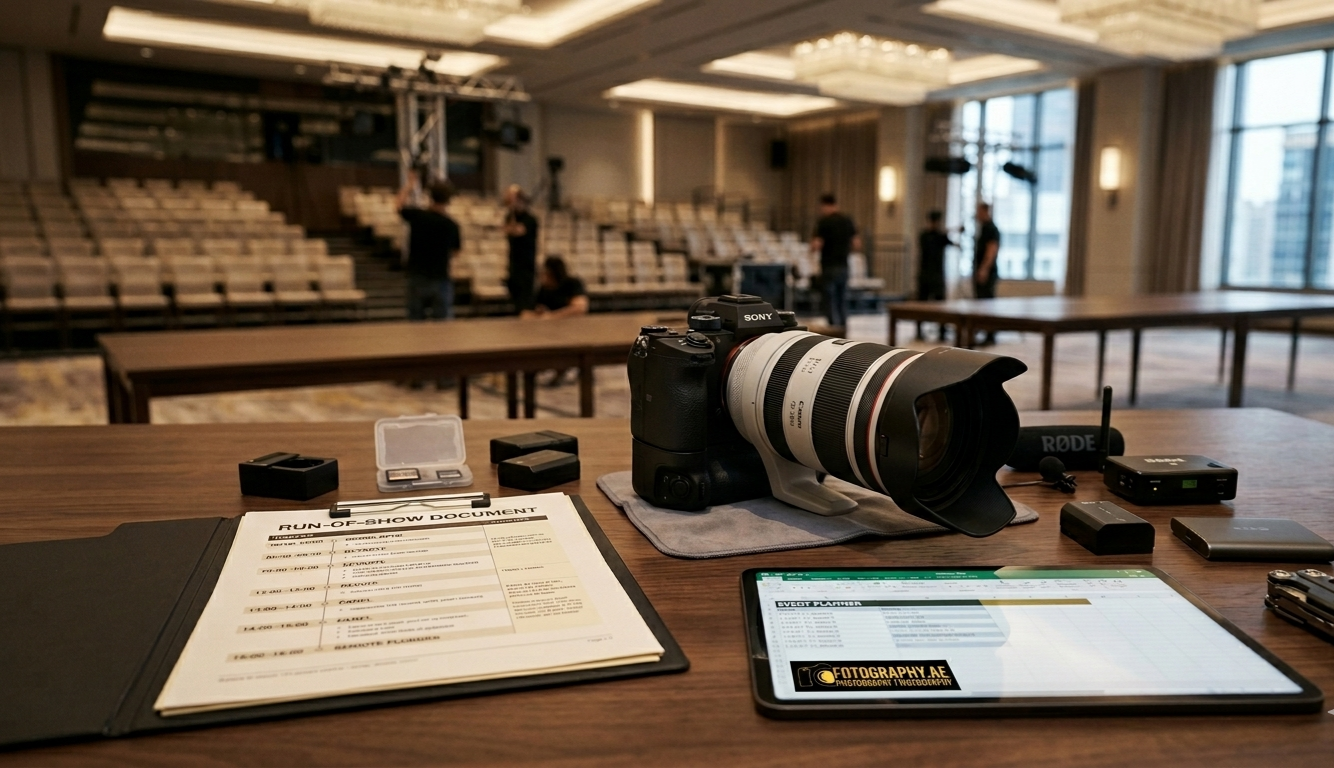
Precision planning: Behind the scenes of a seamless event photography workflow. Flash Photography Protocol in UAE and GCC
Flash photography may be restricted or prohibited in:
- Government and ministerial events
- Religious ceremony contexts
- Some luxury hotel venues with specific policies
- Events with broadcast media where flash disrupts video recording
Always confirm flash permission with the client’s communications team before the event. Experienced event photographers in UAE work confidently in available light when flash is not permitted.
-
Indoor vs. Outdoor Events: How Environment Changes Everything
The environment of the event changes almost every aspect of the photography and videography approach from equipment selection to scheduling, positioning, and post-production.
Indoor Events
Advantages:
- Controlled from weather
- Predictable from a scheduling perspective
- Branded environments can be set up and maintained
Challenges:
- Artificial lighting is often unflattering for photography
- Mixed colour temperatures create inconsistent colour casts
- Restricted movement in formal settings
- Flash restrictions in many venues
Best practice for indoor events: Request the lighting plan from the AV team before the event. Understanding the stage lighting cues helps photographers anticipate exposure changes during the programme.
Outdoor Events in UAE and GCC
Outdoor event photography in the UAE requires specific planning that accounts for the region’s climate and light environment.
The Golden Hour Rule for UAE Outdoor Events:
The optimal window for outdoor event photography in UAE is 45 minutes before sunset (approximately 5:45–6:30 PM depending on season). Light is warm, directional, and flattering. This window should be used for all essential group shots, leadership portraits, and any event photography where image quality is paramount.
Avoid the midday sun period
(11:00 AM – 3:00 PM): Harsh overhead light creates deep eye shadows, overexposed highlights, and uncomfortable conditions for subjects. If events run during this period, position subjects in open shade where possible.
Summer vs. Winter Outdoor Considerations:
UAE outdoor events are predominantly viable from October to March. Summer outdoor events (April to September) present significant challenges including extreme heat, humidity, and haze that affects image quality and equipment function. If a summer outdoor event is unavoidable, early morning slots (7:00–9:00 AM) are the most workable option.
-
Large-Scale Conferences vs. Intimate Corporate Events
The scale of an event is not just a logistical factor it fundamentally changes the coverage approach, team requirements, and deliverable structure.
Intimate Corporate Events (10–50 attendees)
Characteristics:
- Single location, single room
- Close-range access to all attendees
- More relaxed protocol
- Fewer simultaneous moments requiring coverage
Coverage approach:
- Single photographer (or photographer + videographer)
- Full access to all attendees and moments
- More candid and natural coverage possible
- Faster delivery (fewer images to review and edit)
Typical deliverable: 80–200 edited images; 60–90 second highlight video if video is included.
Medium-Scale Corporate Events (50–300 attendees)
Characteristics:
- Single stage but larger room
- Distinct programme segments with transitions
- Mix of formal programme and networking
- Multiple sponsor or stakeholder visibility requirements
Coverage approach:
- 1–2 photographers; 1–2 videographers if video included
- Shot list essential
- Coordinator managing communication between client and photographer
- More structured post-production selection process
Typical deliverable: 200–500 edited images; 2–3 minute highlight video.

- Large-Scale Conferences and Summits (300–1,000+ attendees): Conferences of this scale are common in Dubai’s major venues DWTC, Madinat Jumeirah, Atlantis, and JW Marriott Marquis and in Riyadh’s King Abdulaziz International Conference Centre, Doha’s Qatar National Convention Centre, and similar facilities across GCC.Characteristics:
- Multi-session programming across potentially multiple rooms
- Large main stage with significant speaker distance from press positions
- Complex sponsor visibility requirements
- PR and media team involved with specific deliverable requirements
- VIP and protocol management requirements
Coverage approach:
- 2–4 photographers; multi-camera video team if video included
- Pre-event venue visit essential
- Full shot list with priority hierarchy
- Dedicated client coordinator managing photographer communication throughout
- Possible same-day delivery of social media selects alongside full post-production
Typical deliverable: 400–800+ edited images per day; multi-format video package.
-
Freelancer vs. Agency for Event Coverage in UAE and GCC
The freelancer vs. agency decision for event photography follows the same framework as other business shoots but with additional considerations specific to the live and time-pressured nature of events.
When a Freelance Event Photographer Is the Right Choice
Best suited for:
- Events under 150 attendees
- Single-camera video requirements
- Events where the brief is clear and logistics are straightforward
- Organizations that value direct communication with the person actually behind the camera
- Events with tight budgets that do not justify agency overhead
Key advantage of experienced event freelancers: The person you brief is the person on-site. There is no account manager translating the brief to a junior photographer. A senior specialist freelancer like Mashhood Arshad brings 6+ years of UAE and GCC corporate event experience directly to every production.
When an Event Photography Agency Is the Right Choice
Best suited for:
- Large-scale conferences requiring 3+ photographers simultaneously
- Events with complex multi-camera video production
- Multi-day events requiring team continuity across days
- Events with broadcast requirements
- Situations where a single supplier is needed across photography, video, and post-production at full agency scale
The Hybrid Model: Specialist Freelancer with Production Network
Photography.ae operates as a senior specialist with access to a trusted production network for larger events bringing the direct communication and client relationship of a freelancer, with the ability to scale crew when the event requires it. This is the most common and cost-effective model for mid-to-large corporate events in UAE and GCC.
Decision Summary
Event Requirement Freelancer Agency Specialist + Network Events under 150 people ✓ Ideal Expensive ✓ Ideal Events 150–500 people ✓ With network Also appropriate ✓ Ideal Events 500+ people With full network ✓ Ideal Case by case Same-day social delivery ✓ Faster decisions Slower layers ✓ Faster decisions Direct client communication ✓ Direct Account manager ✓ Direct Multi-room simultaneous Challenging ✓ Better fit ✓ With crew Budget < AED 15,000 ✓ Best fit Hard to scope ✓ Best fit -
UAE & GCC Event Photography and Videography Pricing Guide
Important note: The figures below reflect current 2025 UAE and GCC market rates. Pricing varies based on event duration, team size, deliverable count, editing scope, and location. These figures are for planning purposes. For a specific quote aligned to your event scope, contact Photography.ae directly.
Event Photography Pricing (UAE Market 2025)
Service Freelancer Range (AED) Agency Range (AED) Half-day event coverage (up to 4 hours) 2,500–6,000 7,000–18,000 Full-day event coverage (8 hours) 4,500–10,000 12,000–28,000 Multi-day conference (per day) 4,000–9,000 11,000–25,000 Award ceremony coverage 3,500–8,000 9,000–22,000 Product launch coverage 3,500–8,500 9,000–24,000 Trade show / exhibition coverage (per day) 3,000–7,500 8,000–20,000 Press conference coverage 2,000–5,000 6,000–15,000 Second photographer (add-on) 1,500–3,500 3,500–8,000 Event Videography Pricing (UAE Market 2025)
Service Freelancer Range (AED) Agency Range (AED) Half-day event videography 3,500–8,000 9,000–22,000 Full-day event videography 6,000–15,000 16,000–40,000 60–90 second highlight reel (edit only) 3,000–6,000 7,000–16,000 2–3 minute event recap video 5,000–10,000 12,000–28,000 Full session recording (per session) 2,500–6,000 6,000–15,000 Social media clips package (3–5 clips) 2,500–5,500 6,000–14,000 Multi-camera event production (full day) 10,000–22,000 22,000–60,000 Live streaming production 5,000–15,000 15,000–45,000 Combined Photography + Videography Package Pricing
Most corporate events benefit from commissioning both together. Combined packages offer better coordination and typically 10–20% savings versus separate commissions.
Event Scale Combined Freelancer Range (AED) Combined Agency Range (AED) Half-day (photo + video + highlight reel) 6,000–13,000 16,000–38,000 Full-day (photo + video + recap video) 10,000–22,000 25,000–65,000 Multi-day conference (per day, combined) 9,000–20,000 22,000–55,000 GCC Market Pricing Notes
Events in Saudi Arabia (Riyadh, Jeddah, NEOM), Qatar (Doha), Bahrain, Kuwait, and Oman are covered by Photography.ae. GCC shoots outside UAE include travel, accommodation, and ground logistics fees. Pricing varies by destination, event duration, and team requirements. Photography permit costs for KSA and other GCC markets may apply and are quoted separately.

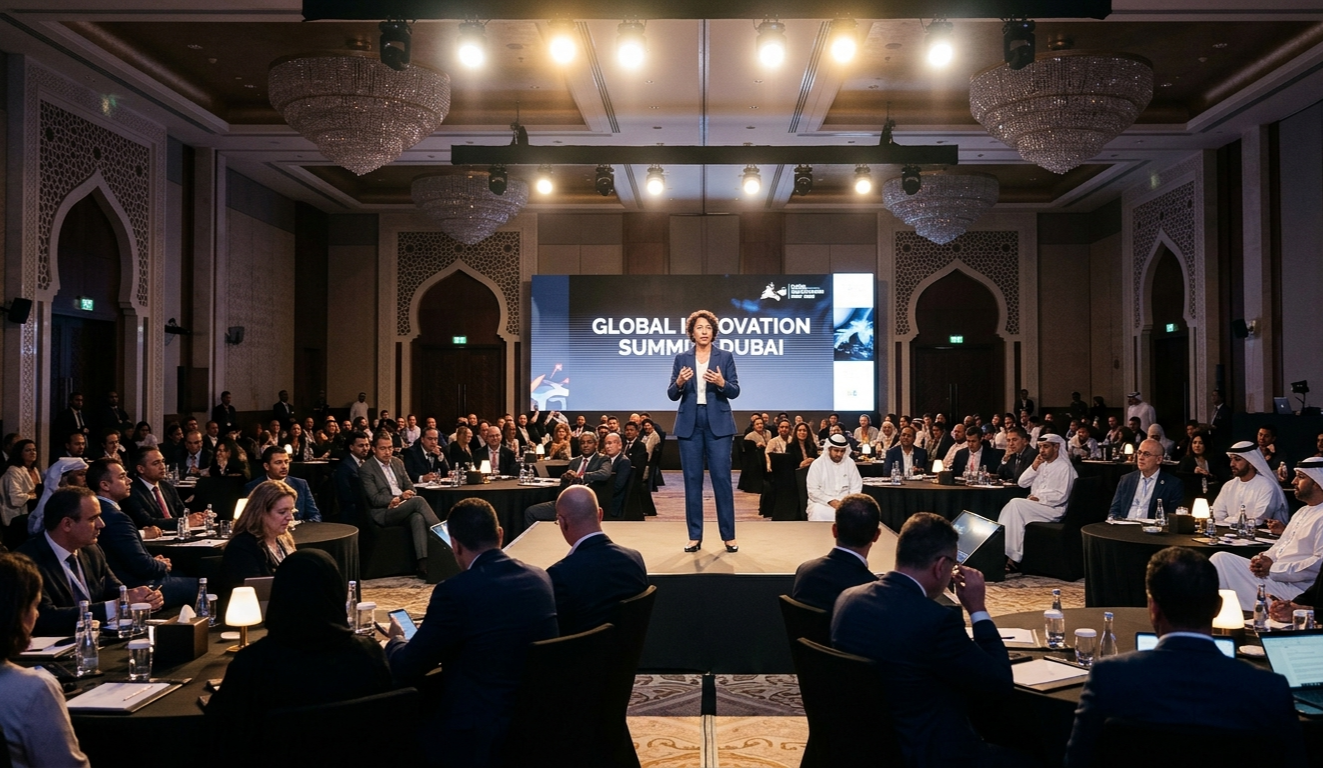
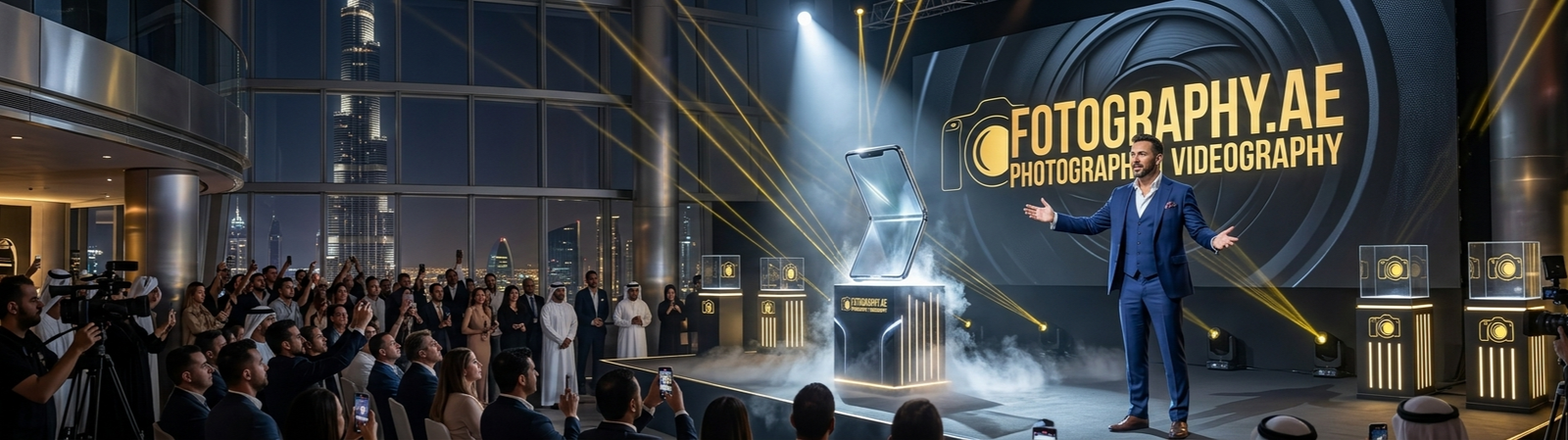
Speaker in blue suit on a round stage -
What Drives Cost Up for Events
- Less than 7 days notice (rush premium: 25–50%)
- Same-day delivery of edited images (add 30–50%)
- Multiple simultaneous rooms requiring additional photographers
- Events requiring pre-event permit applications
- Complex VIP or government protocol coordination
- Remote GCC locations with limited local support infrastructure
- Multi-day events with complex logistics
What Reduces Cost for Events
- Clear, complete brief delivered 2+ weeks before the event
- Single decision-maker for all feedback and approvals
- Organized run-of-show shared early
- Standard delivery timeline (5–10 business days)
- Consolidated feedback in a single round
- AV team connection for audio feed (reduces audio equipment requirements)
-
Post-Production for Events: Selection, Editing, and Delivery
Post-production for events is distinct from studio photography editing because the volume of raw material is significantly higher and the selection process is more complex.
The Selection Process
A typical full-day event produces 800–2,500 raw images from a single photographer. Post-production begins with an editorial selection down to the delivery count agreed in the brief.
Selection criteria used by professional event photographers:
- Technical quality: sharpness, exposure, focus
- Compositional quality: framing, background, visual balance
- Subject quality: expression, posture, eye contact
- Content value: does this image represent a meaningful moment?
- Uniqueness: avoid delivering near-duplicates of the same moment
Typical delivery ratio:
Approximately 10–20% of raw captures are selected for editing. A 1,000-image raw shoot produces 100–200 final edited images.
This ratio should be understood by clients before the event. Receiving 150 edited images from a day-long shoot does not mean the photographer “only took 150 photos.” It means 150 were selected from a much larger raw capture.
Editing Standards for Event Photography
Event-specific editing considerations:
- Exposure correction:
Stage lighting creates heavy exposure variances between subjects. Each image is individually corrected.
- Colour temperature normalization:
Mixed lighting sources (stage spotlights vs ambient ballroom light) create colour inconsistency. This is corrected across the set for visual coherence.
- Noise reduction:
High-ISO captures in low-light ballroom environments require careful noise management to maintain detail while reducing grain.
- Background management
Busy backgrounds common in event environments are managed through exposure and contrast adjustments not extensive compositing at standard editing levels.
- Retouching level:
Standard event photography editing includes light skin correction (temporary blemishes, shine reduction). Heavy commercial retouching is not applied to event images unless specifically requested and scoped separately.
Delivery Formats
Confirm these before the event changing them after editing adds significant time and cost.
Use Case Recommended Format Website and web publication JPEG, sRGB, 72dpi, long edge 2500px Print and high-resolution PR JPEG or TIFF, sRGB, 300dpi LinkedIn and social media JPEG, sRGB, optimized (1200px+ long edge) Internal communications JPEG, standard web resolution Video production (stills integration) High-resolution JPEG or TIFF Delivery Timelines
Scope Standard Delivery Rush Delivery (+ cost) Half-day event, 80–150 images 4–6 business days 24–48 hours Full-day event, 150–300 images 6–10 business days 48–72 hours Multi-day conference, 300–600+ images 10–15 business days 5–7 business days Event video highlight reel 10–16 business days 5–7 business days Same-Day Social Media Delivery
Many corporate events particularly those with active social media teams require a small selection of images delivered during or immediately after the event for same-day posting.
How this works:
- A social media select of 10–20 images is identified during the event itself
- These are lightly processed (exposure, crop, basic correction) and delivered via WhatsApp, AirDrop, or secure file transfer within 1–2 hours of the event or by end of event day
- The full edited gallery is delivered separately on the standard timeline
This is a distinct deliverable and must be agreed in the brief before production begins. Same-day delivery requires a different workflow and is scoped and priced separately.
-
Common Mistakes in Corporate Event Photography
These are the most consistent failures observed across corporate event productions in UAE and GCC markets and how to prevent each one.
Mistake 1: No Run-of-Show Document Provided
The run-of-show is the photographer’s navigation map. Without it, the photographer is guessing when the next key moment will occur and may be in the wrong position when it happens.
Fix: Provide the latest version of the run-of-show at least 48 hours before the event. Share any updates on event day immediately.
Mistake 2: No VIP List with Photos
A photographer cannot prioritize coverage of a key person they cannot identify. In a room of 300 people, VIPs are indistinguishable from other guests without advance briefing.
Fix: Provide a list of all VIPs and key attendees with names, titles, photos, and any coverage notes at least 24 hours before the event.
Mistake 3: Group Photos Left to Improvise
Group photos that are not scheduled in the run-of-show simply do not happen with quality. Gathering 10–20 people for a group shot without advance notice and a designated coordinator produces chaotic, time-consuming results often with someone missing or the light being wrong.
Fix: Schedule every group photo in the run-of-show with a specific time, a list of participants, and a person responsible for gathering them. Add a 5 minutes buffer per group.
Mistake 4: Flash Prohibition Not Communicated in Advance
Discovering that flash is prohibited upon arrival at the venue forces real-time equipment and technique adjustment, something an experienced photographer can manage but not without some impact on setup time and early-event coverage.
Fix: Confirm flash policy with the venue and communicate it to the photographer minimum 48 hours before the event.
Mistake 5: No Coordination Contact on Event Day
When a client wants a specific shot taken or needs to alert the photographer to an unscheduled moment, having no defined communication channel means the message may not reach the photographer in time.

Documentary-style photography that highlights thought leadership. - Fix: Assign one coordinator whose sole role during the event is to track the shot list and communicate directly with the photographer. This person is not the event MC, not the client’s CEO, and not someone managing 10 other tasks.
Mistake 6: Expecting Immediate Full Gallery Delivery
Post-event, it is common for clients to ask for all images within hours or the following morning. This expectation results in undertreated, inconsistently edited images or a disappointed client when the photographer declines.
Fix: Agree the delivery timeline before the event. If same-day social media selects are required, scope this separately. Full gallery editing takes time for a reason it is where professional quality is established.
Mistake 7: Briefs Sent the Day Before the Event
A brief arriving 24 hours before a large corporate event cannot be executed at the same level as one received two weeks prior. Pre-event research, venue assessment, VIP familiarization, shot list development, and equipment planning all require time.
Fix: Submit a complete brief minimum 7–10 days before any event. For large conferences, 3–4 weeks is recommended.
Mistake 8: Confusing Documentation with Photography
Some clients want “everything recorded” a documentation mindset, not a photography mindset. This produces high image volumes but low usability. Professional event photography is about selecting and capturing meaningful moments, not creating an unedited archive.
Fix: Define what the images will be used for. Let this guide the shot list and coverage priorities, not a desire for volume.
Mistake 9: No Permit Planning for Restricted Venues
In UAE, certain venues including areas of Dubai Media City, DIFC, and many government or institutional locations require photography permits. Arriving without one can result in being denied entry or asked to cease photography.
Fix: Confirm with the venue whether a permit is required. Photography.ae handles permit applications for clients where required but this must be initiated at least 7–14 days before the event.
Mistake 10: Separating Photography and Videography Briefs
When photography and videography are commissioned separately without coordination, the two operators may position themselves in ways that interfere with each other photographer blocking camera position, or video audio equipment interrupting still photography sequences.
Fix: Commission photography and videography together through a single coordinator. Brief both operators simultaneously so positions and sequences are coordinated from the outset.
19. The Complete Corporate Event Shoot Checklist
3–4 Weeks Before (Strategic Planning)
- Define event objectives and visual output goals
- Identify all required deliverables (photography, videography, formats)
- Confirm budget
- Book photographer and/or videographer
- Obtain run-of-show (first draft)
- Confirm venue access and photography permissions
- Begin permit application if required (venues in regulated areas of Dubai and GCC)
1–2 Weeks Before (Pre-Production)
- Share run-of-show (latest version) with photographer
- Provide VIP list with names, titles, and photos
- Finalize and approve shot list
- Confirm sponsor visibility and branding requirements
- Confirm audio feed availability with AV team (if videography is included)
- Confirm flash photography policy with venue
- Confirm delivery formats, resolutions, and timeline in writing
- Assign on-site coordination contact for event day
- Discuss same-day social media delivery if required (scope and price separately)
48 Hours Before (Final Checks)
- Share updated run-of-show (any programme changes)
- Confirm VIP list for any additions or removals
- Confirm access passes and accreditation for photographer
- Brief coordination contact on their role and communication protocol
- Confirm any restricted areas or photography-prohibited moments
- Confirm group photo schedule (times, people, locations)
Day of Event (On-Site)
- Photographer arrives 60–90 minutes before doors open
- Environment and branded installations photographed before guests arrive
- Equipment tested under actual venue lighting
- Coordination contact is available and has direct communication channel with photographer
- Run-of-show printed or accessible on device
- VIP list accessible to photographer
- Group photos confirmed and participants briefed
- Social media selects identified and delivered on schedule if agreed
Post-Production
- Confirm delivery timeline is aligned with agreed schedule
- Single consolidated feedback from one decision-maker
- Confirm file naming convention before delivery
- Final approval in writing before delivery is marked complete
- Archive originals in organized folder structure
20. Frequently Asked Questions
Structured to answer every informational search query and conversational AI query related to corporate event photography and videography in UAE and GCC.
General Questions
What is event photography?
Event photography is the professional capture of corporate and business events using still photography. It produces a library of usable images that document the event for PR, marketing, social media, internal communications, and organizational records. Professional event photography goes beyond documentation; it captures moments that communicate the value, energy, and credibility of the event and the organization behind it.
What is event videography?
Event videography is the professional video production of corporate events. It results in edited video assets highlighting reels, recap videos, session recordings, or social media clips that communicate the event’s content, atmosphere, and outcomes in motion and audio.
What is the difference between event photography and event videography?
Event photography produces still images for multi-channel, long-term use. Event videography produces motion content for high-engagement, time-sensitive distribution. Photography has a longer asset shelf life and higher versatility across channels. Videography has higher emotional impact per view but shorter reuse window. Most significant events benefit from both.
Do I need both a photographer and a videographer for my event?
For events that will be promoted across PR, social media, website, and internal channels, yes. For small internal events with limited distribution, a photographer alone is often sufficient. For events where the primary output is a promotional video, a videographer may be prioritized. The decision depends entirely on how the assets will be used.
What makes corporate event photography different from general event photography?
Corporate event photography operates within brand guidelines, protocol requirements, and organizational communication objectives. It requires understanding of the business context who the VIPs are, what the sponsor requirements are, which moments matter for PR, and how images will be used across the organization. General event photography focuses on documentation. Corporate event photography focuses on communication.
Planning and Preparation
How far in advance should I book an event photographer?
For events under 100 people, book 2–3 weeks in advance. For medium-scale events (100–300 attendees), book 3–5 weeks in advance. For large conferences and multi-day events, book 5–8 weeks in advance. Last-minute bookings (under 7 days) are sometimes possible but may be subject to availability constraints and rush fees.
What information should I provide to an event photographer before the shoot?
Provide: the run-of-show, VIP list with photos and titles, shot list or priority moments, sponsor requirements, venue access details, flash and photography policy, delivery format requirements, and a named coordination contact for event day. The more information provided in advance, the better the coverage will be.
What is a run-of-show and why does a photographer need it?
A run-of-show is a detailed schedule of every programme element at the event, with specific timings. The photographer uses it to anticipate key moments, be in the correct position before they occur, and track progress against the shot list throughout the day. Without it, the photographer is reactive rather than proactive and key moments can be missed.
Do I need a permit to photograph an event in Dubai?
Photography permits may be required for events in regulated areas including parts of Dubai Media City, DIFC, Dubai Municipality parks, and certain government or institutional venues. Requirements vary by location and event type. Photography.ae advises on permit requirements for all booked events and handles applications on behalf of clients where required.
Can corporate event photography be done without flash?
Yes. Experienced corporate event photographers in UAE regularly work in available light especially in settings where flash is distracting or prohibited (government events, broadcast-heavy conferences). This requires fast lenses, high-ISO camera bodies, and strong post-production noise management. Available-light results may differ in character from flash-lit images this should be discussed in the brief.

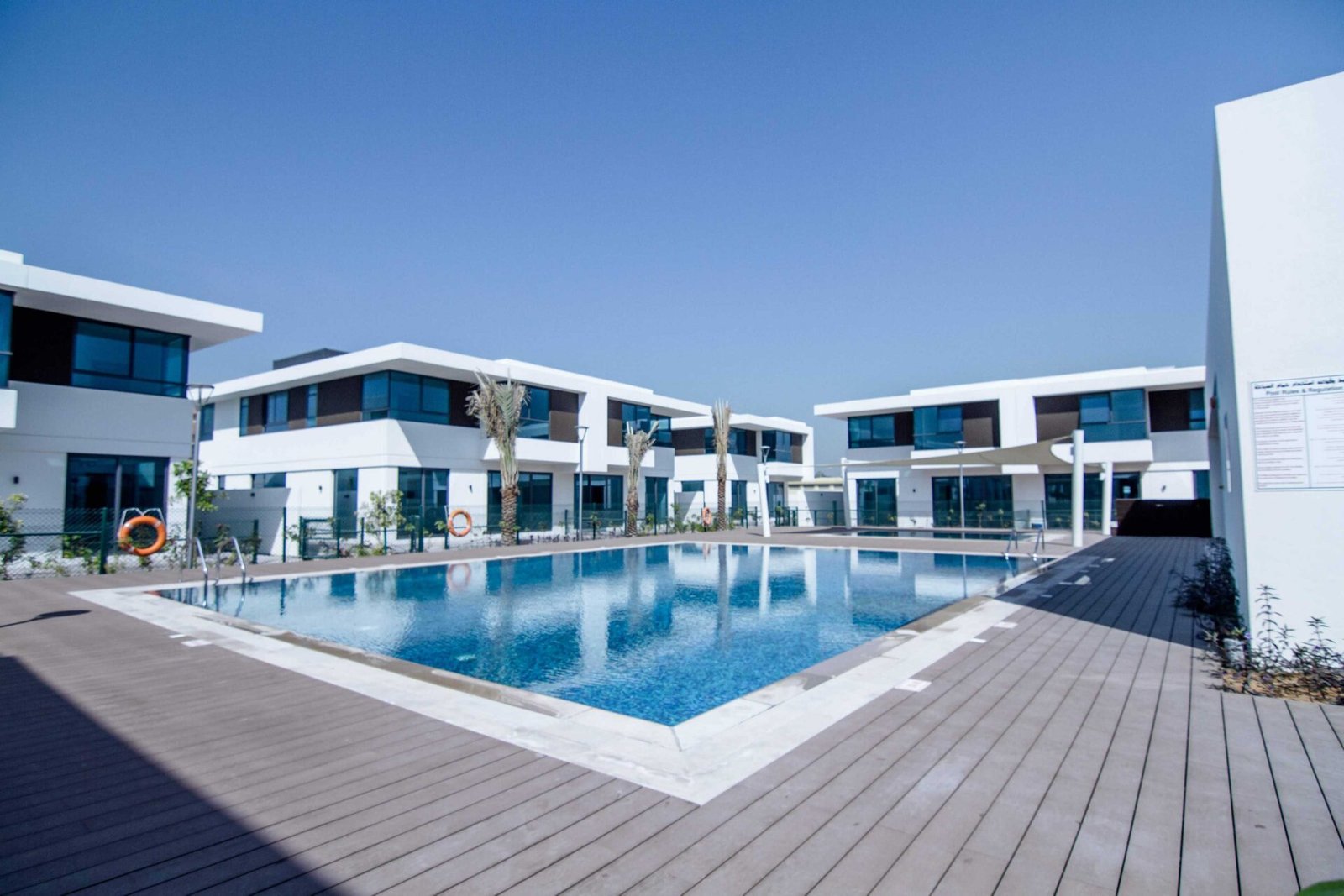
Contemporary resort-style villas arranged around a serene central pool, showcasing clean architecture and a relaxing, upscale atmosphere -
Shot Lists and Coverage
What should be on a corporate event photography shot list?
A corporate event shot list should cover: venue branding before guests arrive, VIP arrivals, speaker coverage at each programme moment (wide, medium, and close angles), panel discussions, awards presentations, audience engagement, networking moments, sponsor branding, and post-event group photos. The specific priorities are ranked by importance so the photographer knows which to prioritize if moments overlap.
How do I ensure all important moments are captured at my event?
Provide a detailed shot list and a run-of-show at least one week before the event. Assign a coordination contact who monitors the shot list in real time and alerts the photographer to upcoming priority moments. Schedule group photos formally in the run-of-show rather than leaving them to organise spontaneously.
What is the most common moment missed in corporate event photography?
Group photos are the most consistently missed or poorly executed moments in corporate events. They require gathering specific people at a specific time in a specific location none of which happens without advance planning and a dedicated coordinator. Always schedule group photos in the run-of-show.
Can an event photographer cover multiple rooms simultaneously?
No. One photographer covers one room at a time. For events with simultaneous sessions across multiple rooms, a second photographer is required. Always plan crew size based on simultaneous coverage requirements, not total attendee count.
Technical Questions
What equipment does a professional event photographer use?
A professional event photographer uses full-frame DSLR or mirrorless camera bodies, fast zoom lenses (24–70mm f/2.8, 70–200mm f/2.8), a prime lens for low-light work, an external speedlight for controlled flash environments, and a backup camera body. For video, additional equipment includes a gimbal or stabilizer, dedicated audio recording devices, and a tripod or monopod for stable long-take shots.
How do event photographers handle low-light ballroom environments?
Professional event photographers handle low-light venues through a combination of fast lenses (wide aperture f/1.4–f/2.8), high ISO settings on modern full-frame sensors, and controlled flash technique where permitted. Post-production noise reduction is applied to manage grain in high-ISO captures. Pre-event venue assessment allows the photographer to plan the right equipment for the specific venue.
What audio equipment is used for event videography?
Audio options for event videography include: a direct feed from the event’s AV board (cleanest source, requires pre-event coordination), lavalier microphones placed on key speakers (requires physical placement before the programme), and directional shotgun microphones on the camera (for ambient audio capture). A dedicated audio engineer is recommended for large or broadcast-quality productions.
What resolution are event photos delivered in?
Standard delivery is full-resolution JPEG files suitable for both web and print use. Web-optimized exports (72dpi, 2500px long edge) and social-media-ready crops are typically included. Delivery resolution should be confirmed in the brief before production.
Pricing and Budget
How much does event photography cost in the UAE?
Event photography in the UAE costs between AED 2,500–6,000 for a half-day with an experienced freelance photographer, and AED 4,500–10,000 for a full-day. Agency rates are typically 2–3× higher. Pricing varies based on event complexity, deliverable count, and post-production scope.
How much does event videography cost in the UAE?
Event videography in UAE costs between AED 3,500–8,000 for half-day coverage and AED 6,000–15,000 for a full day with a specialist freelancer. A 60–90 second edited highlight reel adds AED 3,000–6,000 to the production cost. Full brand documentary productions from events cost significantly more.
Is it cheaper to book a photographer and videographer together?
Yes. Booking combined photography and videography through a single production partner typically saves 10–20% versus separate commissions and eliminates the coordination friction of managing two independent operators on event day.
What is included in event photography pricing?
Standard event photography pricing typically includes: on-site production time, image selection from all raw captures, professional editing to agreed visual standard, and file delivery in agreed formats. Travel within the UAE is often included within Dubai and Abu Dhabi for local-based photographers. Same-day social media delivery, rush turnaround, and additional revision rounds are usually scoped separately.
How many photos will I receive from my event?
Final image count should be agreed before the event. A typical half-day event produces 80–200 edited images. A full-day event produces 150–400 edited images depending on the volume and variety of programme moments. Clarify whether the contract specifies a minimum image count or a selection from the full capture.
Delivery and Post-Production
How long does it take to receive event photos after the event?
Standard delivery is 5–10 business days for half-day events, and 8–15 business days for full-day events. Rush delivery (24–72 hours) is available at an additional premium and must be agreed before the event. Same-day social media selects (10–20 images) can be delivered during or immediately after the event if scoped in advance.
Can I get edited photos the same day as the event?
A curated selection of 10–20 social media selects can be delivered on the same day if this is agreed in the brief before production. Full gallery editing is not possible same-day for any event of meaningful size. Agree the social media delivery scope, format, and timing in writing before the event.
How should event photos be named and organized for delivery?
Agree a file naming convention with the photographer before delivery. For large events, organizing by programme segment (keynote, networking, awards, etc.) significantly reduces the time your team spends locating specific images.
UAE and GCC Specific
What types of corporate events are most commonly photographed in Dubai and UAE?
The most commonly photographed corporate events in UAE include industry conferences and summits, real estate project launches, financial sector AGMs and stakeholder events, hospitality openings and gala dinners, technology product launches, government and semi-government institutional events, and HR and employer branding events.
Does Photography.ae cover events outside of UAE?
Yes. Photography.ae covers events across GCC including Saudi Arabia (Riyadh, Jeddah, NEOM), Qatar (Doha), Bahrain (Manama), Kuwait, and Oman. International GCC projects include travel logistics and are quoted with appropriate travel fees. Pre-event coordination is more intensive for out-of-UAE productions given logistical complexity.
Are there photography restrictions at government events in UAE?
Yes. Events involving government officials, ministerial functions, and institutional ceremonies in UAE typically have specific photography protocols. These may include restrictions on flash photography, defined permitted zones for photographers, approval requirements for images before publication, and accreditation requirements. Photography.ae has experience navigating these requirements across UAE and GCC.
What is the best venue for corporate events from a photography perspective in the UAE?
From a photography and videography perspective, venues with controlled lighting, high ceilings, good stage visibility, and access space for photographers are ideal. Hotels with dedicated conference ballrooms (particularly those with LED or hybrid lighting systems) tend to perform better than venues with fixed fluorescent lighting. Outdoor venues in cooler months with access to golden hour timing produce excellent results. For specific venue recommendations, contact Photography.ae this is covered as part of pre-production consultation.
21. About Photography.ae & Mashhood Arshad
Photography.ae is a UAE-based corporate photography and videography practice led by Mashhood Arshad, a specialist in business and event visual production with over 6 years of experience across corporate clients in UAE and GCC.
Event photography and videography experience includes:
- Industry conferences and summits in Dubai, Abu Dhabi, and across GCC
- Award ceremonies for financial services, technology, and real estate sectors
- Product and project launches across UAE’s diverse corporate market
- Government and institutional event coverage
- Corporate gala dinners, team events, and leadership functions
- Trade show and exhibition documentation
Operating regions:
- Dubai, Abu Dhabi, Sharjah, and across UAE
- Riyadh and Jeddah (Saudi Arabia)
- Doha (Qatar)
- Manama (Bahrain)
- Kuwait City (Kuwait)
- Oman
What makes Photography.ae different for event work:
Every event is preceded by a structured pre-production shot list, VIP brief, run-of-show review, and logistics coordination. Coverage is guided by a priority-first framework, not a volume-first approach. This means every deliverable is intentional, usable, and aligned with the client’s actual communication objectives, not just a large file of captures hoping the right moments are in there somewhere.
→ For event photography and videography inquiries, visit Photography.ae
Final Takeaway
Corporate events in UAE and GCC are significant organizational investments in budget, in time, and in the opportunity to communicate credibility, culture, and leadership to every audience that matters.
The visual output of those events is not a secondary consideration. It is often the only evidence that the event existed and that it mattered.
The organizations that get consistent, high-quality event coverage share one characteristic: they plan their visual production with the same seriousness as their event logistics.
A great event photograph is not lucky. It is engineered through a complete brief, a structured shot list, a coordinated team, and a photographer who was in the right place at the right time because both of them planned it that way.
Guide maintained and updated by Photography.ae. For the latest information on services, pricing, and availability, contact directly at Photography.ae.
All pricing ranges reflect UAE market data as of 2025. GCC pricing varies by market and project scope.