Published by Fotography.ae | Written by Mashhood Arshad Real Estate, Corporate & Commercial Photographer, 6+ Years Across UAE & GCC
What Is Real Estate Photography and Videography?
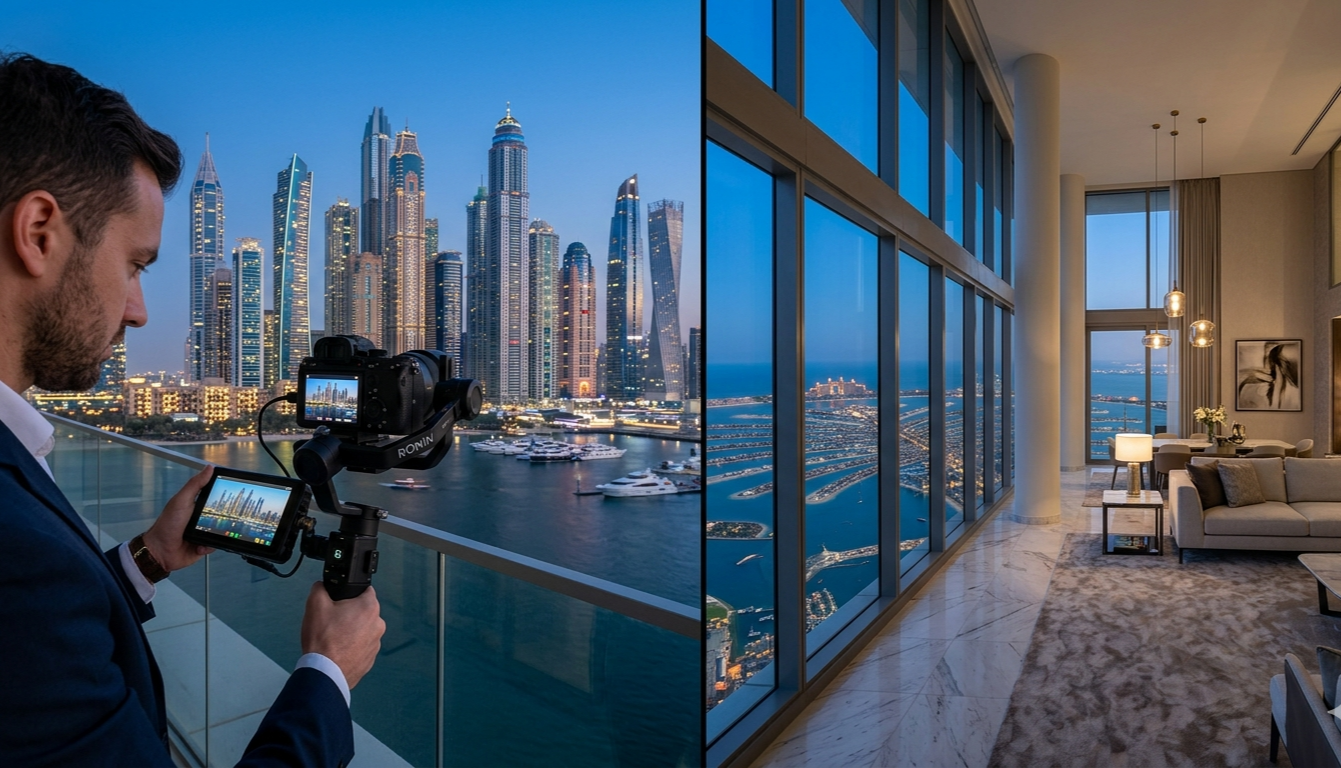
Real estate photography is the professional capture of properties residential, commercial, hospitality, or mixed-use to present them in their most accurate and appealing form for sale, rental, investment, or hospitality marketing.
Real estate videography extends this into motion, producing walkthrough videos, cinematic property films, aerial sequences, and short-form social content that allow potential buyers, renters, or guests to experience the scale, flow, and atmosphere of a property before visiting in person.
Together, they form the primary visual communication layer of every property listing, developer marketing campaign, and short-term rental platform profile in the UAE and GCC.
What Real Estate Visual Production Covers
| Format | What It Is | Primary Use Case |
| Interior photography | Room-by-room still images | Listing platforms, agent marketing |
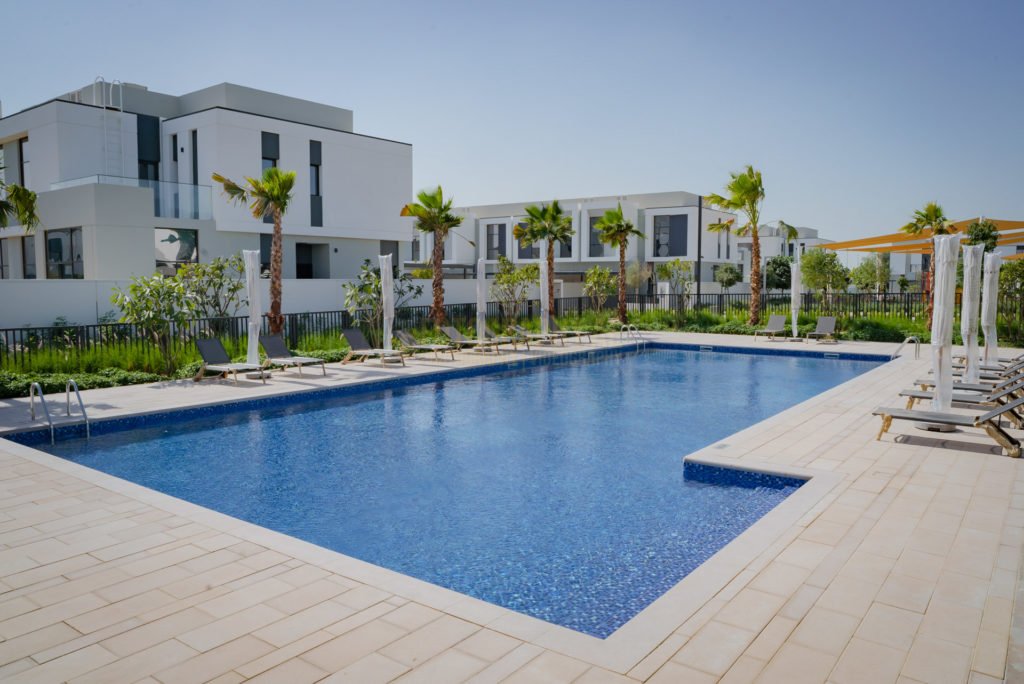
| Exterior photography | Building facade, gardens, pool, community | Listing platforms, developer branding |
| Twilight / blue hour photography | Exterior shots at dusk with lit interiors visible | Premium listings, luxury branding |
| Drone / aerial photography | High-angle property and area context | Villas, compounds, developer projects |
| Walkthrough video | Smooth camera movement through all rooms | Listing enhancement, social media |
| Cinematic property film | Story-driven, branded property video | Luxury listings, developer campaigns |
| 3D virtual tour (Matterport) | Interactive 360° room-to-room walkthrough | International buyers, off-plan preview |
| Floor plan | Scaled 2D layout drawing | All listings — pre-qualification standard |
| Virtual staging | Digitally furnished images of empty spaces | Vacant properties, off-plan visualisation |
| Social media reels | Short-form vertical video for Instagram/TikTok | Agent and developer social channels |
Where These Assets Are Used in UAE’s Property Market
- Property listing portals: Bayut, Dubizzle, Property Finder, Airbnb, Booking.com
- Developer marketing: off-plan launch brochures, investor presentations, website
- Agent marketing: personal brand content, agency portfolio
- Investor and institutional presentations
- Holiday home and short-term rental platforms
- PropTech and real estate technology platforms requiring standardized media
- Press and media coverage of property launches and developments
Key perspective: In UAE’s property market where a significant proportion of buyers and renters are making decisions from outside the country, often sight-unseen the visual presentation of a property is frequently the difference between a viewing booking and a scroll past. Professional property photography is not a marketing luxury. In this market, it is the listing itself.
Why Visual Quality Determines Listing Performance in UAE Property Markets
UAE’s residential and commercial property market has characteristics that make visual quality more important here than in most markets globally.
The International Buyer Dynamic
A substantial proportion of UAE property transactions involve buyers who are not currently based in the country. Buyers from India, the UK, Russia, China, and across Europe regularly make purchase decisions based primarily and sometimes exclusively on digital property presentations. A listing with 8 dark, uncropped smartphone images does not close international sales. A listing with professional photography, a drone exterior, and a Matterport virtual tour converts inquiries from buyers who have never stepped inside the property.
The Platform Competition Reality
On Bayut and Dubizzle UAE’s two dominant listing platforms, any search result page shows dozens of competing listings for the same community, floor plan, or building. In this environment, the thumbnail image is the first and most important differentiating factor. Properties with professional photography consistently achieve:
- Higher click-through rates from search results
- Longer time spent on the listing page
- More inquiry conversions relative to total views
- Faster time-to-close from listing to agreement
The Price-Per-Square-Foot Stakes
At price points common in Dubai’s premium markets Palm Jumeirah, Downtown, Emirates Hills, DIFC, Bluewaters a property photograph that undersells the space or makes it appear dark, small, or dated is directly costing money. At AED 2,000–5,000 per square foot, the difference between a property that receives three viewings and one that receives fifteen is not always the property it is often the photography.
The Developer Marketing Standard
UAE’s off-plan property market sets a globally high bar for visual presentation. Developers like Emaar, Nakheel, Aldar, Damac, Sobha, and Meraas invest significantly in visual production for every launch CGI renders, lifestyle photography, aerial drone footage, cinematic brand films. This standard influences what buyers expect across the market, including for secondary market listings.

The 8 Types of Real Estate Photography and Which One Your Listing Needs
Real estate photography is not a single service. There are eight distinct types, each with different technical requirements, intended outputs, and appropriate use cases.
Type 1: Standard Interior and Exterior Listing Photography
The foundation of all property marketing. Professional still images of every room, the exterior, and key features processed to the standard required for listing portals and agent marketing.
What it covers:
- All interior rooms: living areas, bedrooms, bathrooms, kitchen, dining
- Key architectural and design features
- Building exterior from optimal angle(s)
- Outdoor areas: garden, balcony, terrace, pool
- Community or building amenity spaces if accessible
Who needs it:
Every property being listed for sale or rent. This is the non-negotiable minimum for any professional listing in the UAE.
Technical standard:
Wide-angle architectural lens (typically 16–24mm full-frame equivalent), tripod-mounted for consistency, corrected verticals, balanced interior-to-window exposure.
→ For residential and commercial listing photography in UAE and GCC, see Fotography.ae Real Estate Listing Photography
Type 2: Luxury and Premium Property Photography
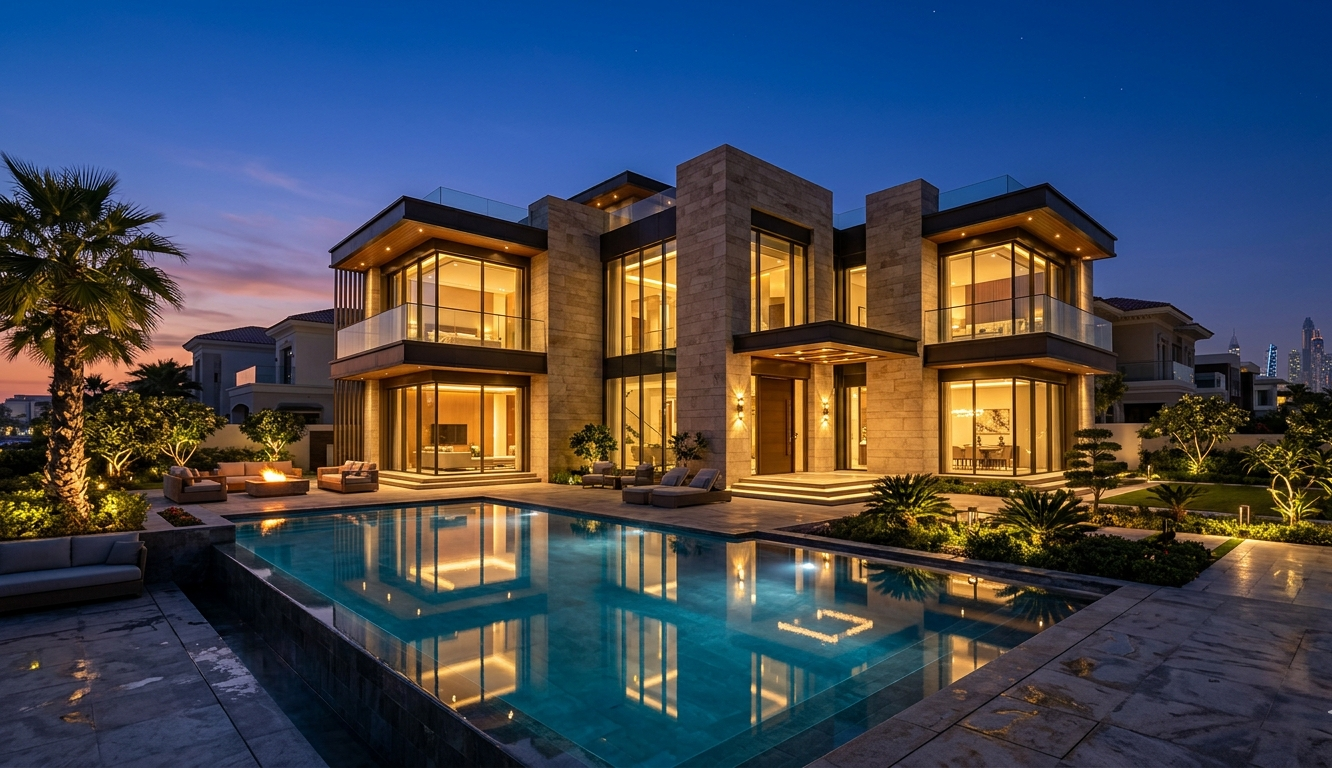
A higher-production version of standard listing photography with greater attention to styling, lighting, and post-production quality for properties in premium price brackets where the photography itself signals the tier of the listing.
What differentiates it:
- Longer time per room (15–30 minutes vs 5–8 minutes for standard)
- Supplementary lighting to enhance mood and eliminate flat, uniform illumination
- Detail photography of finishes, fixtures, and design features
- Styling adjustments on set (cushion placement, towel folding, flower arrangements, book placement)
- More extensive post-production with sky enhancement, object removal, and colour precision
- Architectural twilight shots as standard (not optional add-on)
Who needs it: Penthouses, villas, luxury apartments
above a certain price threshold, show apartments, and any property where the marketing must communicate premium positioning.
In Dubai, properties above approximately AED 3–4 million typically benefit from this standard. Below that threshold, standard professional listing photography is appropriate.
Type 3: Architectural Photography
Architectural photography focuses on the building and designed environment as a subject in its own right, communicating the design intent, material quality, and spatial experience of the architecture.
How it differs from listing photography:
Listing photography shows what the property looks like. Architectural photography interprets how the property was designed to feel. It is produced for architects, interior designers, developers, and design publications not primarily for property listing portals.
Who needs it:
Architectural firms, interior design studios, property developers showcasing design quality, construction companies, design awards submissions.
Technical standard:
Tilt-shift lens correction, technically precise vertical and horizontal alignment, extended post-production for precise exposure management, typically longer shoots (full day per project).
Type 4: Airbnb and Short-Term Rental Photography
Distinct from standard listing photography because the goal is different. Airbnb photography must communicate the experience of staying in the property not just what the property looks like. The target audience is making a short-term hospitality decision, not a long-term investment decision.
What this changes:
- Lifestyle elements become important: a set coffee table, a made bed with styled cushions, a towel folded over a bath, a view through an open window
- Atmosphere matters more than technical perfection some warmth and ambience is desirable
- Detail photography of amenities is essential (kitchen equipment, streaming devices, local touches, views)
- Exterior community context is very important (pool area, gym, lobby, nearby beach or attraction)
This is covered in depth in Section 6.
→ For Airbnb and short-term rental photography in UAE, see Fotography.ae Airbnb & Holiday Home Photography |
Type 5: Twilight and Blue Hour Photography
Twilight photography is one of the highest-impact formats in luxury real estate photography. Exterior shots taken at dusk when the sky transitions from sunset to deep blue and interior lights are visible through windows produce images that are dramatically more appealing than daytime exterior shots for premium properties.
This is covered in depth in Section 10.
Type 6: Aerial and Drone Photography
Drone photography provides perspectives impossible from ground level, showing the property in its site context, revealing the scale of a villa plot, capturing a rooftop pool against a skyline, or establishing the relationship between a development and its waterfront location.
This is covered in depth in Section 11.
Type 7: Off-Plan and Developer Photography
Distinct from all other categories because the subject may not yet exist physically. Off-plan developer photography combines physical production (show apartments, construction progress, site context) with CGI and renders and requires an understanding of the off-plan marketing lifecycle.
This is covered in depth in Section 15.
Type 8: Commercial Property Photography
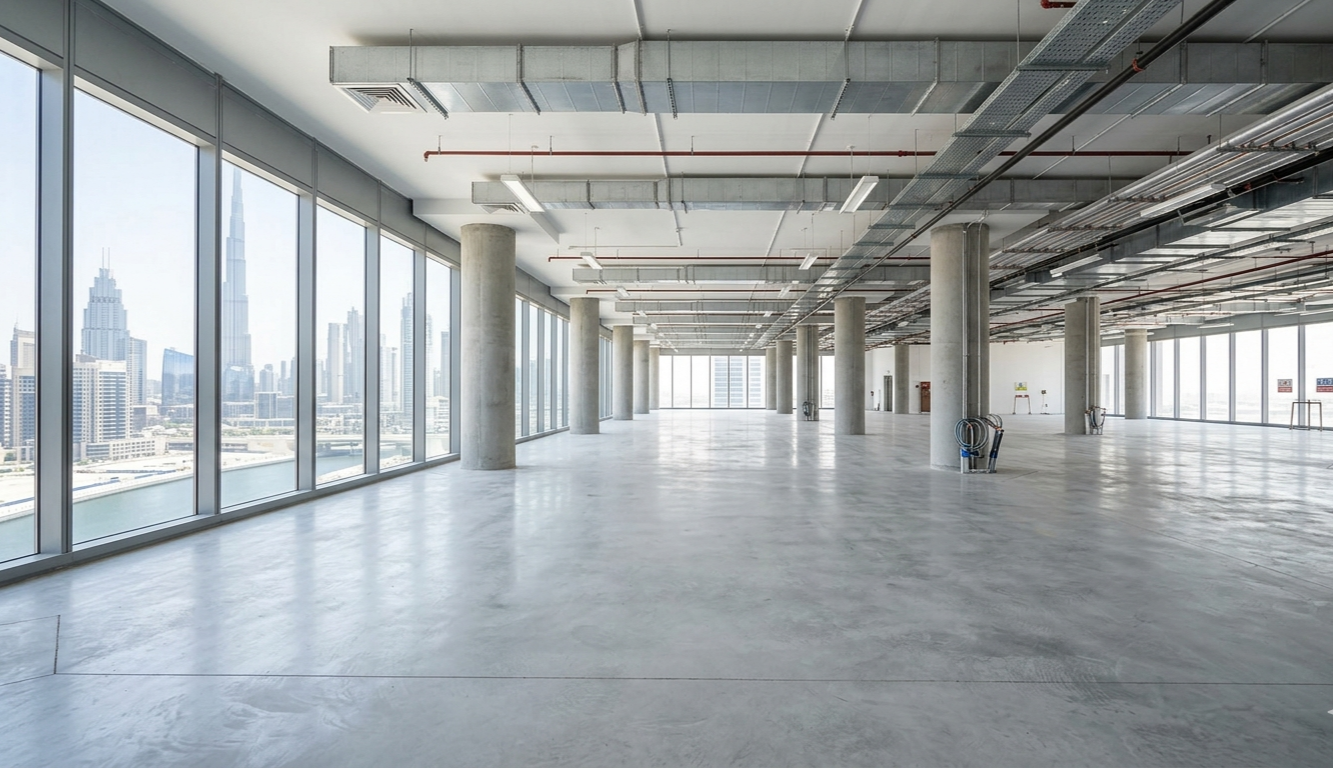
Commercial property photography serves offices, retail spaces, warehouses, hospitality venues, and mixed-use developments. It differs from residential photography in purpose (communicating commercial utility and location value rather than lifestyle appeal) and technical approach (spaces are larger, often less furnished, and may require specific shots for RERA compliance or corporate due diligence).
Who needs it:
Commercial agents and brokers, corporate real estate teams, developers marketing commercial units, F&B operators photographing venues for leasing, hospitality groups documenting properties for institutional reports.
Real Estate Videography Formats: Walkthrough, Cinematic, Aerial, and Social
Real estate video is not one format. Different video types serve completely different purposes, and the most common mistake in commissioning real estate video is ordering the wrong format for the intended use.
Format 1: Property Walkthrough Video
What it is: A smooth, continuous camera movement through the property room by room, following a logical flow from entrance through living areas, bedrooms, bathrooms, and outdoor spaces.
Tone: Functional and informative. The viewer’s experience approximates physically walking through the property.
Length: Typically 90 seconds to 3 minutes depending on property size.
Best used for: Standard listing enhancement on Bayut, Dubizzle, and Property Finder. Agent social media. Email campaigns to registered buyer databases. Properties where spatial flow and layout comprehension are the primary challenge (non-linear apartments, split-level villas, large compounds).
What it requires: Gimbal-stabilized camera movement, consistent exposure management through all room-to-window transitions, audio soundtrack (no voiceover typically), basic colour grade.
Format 2: Cinematic Property Film
What it is: A brand-produced film that uses storytelling, music, voiceover (optional), and directed sequences to communicate the lifestyle and emotional experience of living in the property.
Tone: Aspirational and immersive. The viewer is invited to imagine themselves in the space rather than simply evaluating it.
Length: Typically 2–4 minutes for full cinematic treatment.
Best used for: Premium and luxury property listings. Developer flagship unit marketing. Agent personal brand differentiation. Properties in internationally competitive markets where buyers need to fall in love with a property remotely.
What it requires: Pre-production (scripting the narrative and shot list), full-day production, multiple camera setups, potential talent (lifestyle model) for human scale and lifestyle suggestion, extensive post-production including colour grading, sound design, and motion graphics.
Format 3: Aerial and Drone Video
What it is: Footage captured from a drone providing overhead perspectives, sweeping reveals, and community context that no ground-based camera can achieve.
Best used for: Villas with significant plot and garden, beachfront or waterfront properties, master community developments, properties where location and view are key selling points.
This is covered further in Section 11.
Format 4: Social Media Short-Form Video (Reels)
What it is:
Fast-paced, vertical or square format video optimized for Instagram Reels, TikTok, and YouTube Shorts typically 15–60 seconds with trending audio or branded music.
Best used for:
Agent personal brand marketing on social media, developer teaser content before a listing goes live, property launch announcement content.
What it requires:
Different framing from standard landscape video (vertical 9:16 composition), faster pacing, strong opening frame to prevent scroll-past, platform-optimized export.
Important distinction:
Reels and social content cut from a standard property walkthrough often perform poorly because standard walkthrough framing does not translate to vertical social formats. For serious social media use, social-format content should be shot specifically for the format or a dedicated social cut should be planned and framed during the main shoot.
Format 5: Developer Sales Centre and Off-Plan Launch Video
Videos produced specifically for the physical sales centre environment used on looping screens, presentation walls, and in investor briefings. Typically more polished and brand-heavy than standard listing videos, with CGI integration and music-driven pacing.
Residential vs. Commercial vs. Off-Plan: How Property Type Changes Everything
The type of property fundamentally shapes what photography and videography should look like, how it should be planned, and what it needs to communicate.
Residential Property Photography
Goal: Make the buyer or renter emotionally connect with the space and imagine themselves living there.
Approach: Wide-angle interior shots that make rooms feel spacious, warm lighting that creates welcoming atmosphere, detail shots of finishes and features that communicate quality, exterior shots that establish pride of ownership.
Key challenge in UAE context: Many UAE apartments are rented or sold furnished in which case styling and furniture positioning are pre-existing. Many others are rented empty in which case virtual staging or well-chosen lifestyle props become important. Some properties are show apartments or model units in which case they are usually pre-styled by a professional interior stylist and photography can begin immediately.
UAE-specific considerations:
- High-rise apartments require exterior photography from a position that captures the view rather than just the facade often drone or a high-angle shot from an adjacent building or public area
- Community amenity shots (pool, gym, lobby) are expected standard inclusions in UAE listings and are often decisive for renters
- Window views are a major selling point in UAE many listings succeed or fail based on how well the view is presented
Commercial Property Photography
Goal:
Communicate utility, accessibility, size, condition, and location value to a business decision-maker.
Approach:
More technical, less atmospheric than residential. Clean, well-lit images that accurately represent ceiling heights, column grids, loading access, power specifications, and interior configuration. Location context (building exterior, street access, parking) is highly important.
What commercial listings need that residential don’t:
- Floor plate and column grid documentation
- Loading bay, service elevator, and infrastructure photography
- Building common area and lobby representation
- Exterior from street level showing access and signage visibility
- Surrounding area context (for retail footfall and adjacency; for office transport links)
Who commissions commercial property photography:
Commercial agents and brokers (JLL, CBRE, Cushman & Wakefield, Knight Frank), corporate real estate teams, property developers, RERA-registered real estate agencies with commercial listings.
Off-Plan Property Photography
Off-plan photography is one of the most complex categories in UAE real estate because the property being marketed frequently does not yet physically exist, or exists only as a show apartment that must represent a range of unit types, views, and finishes across an entire development.
Real Estate Photography for Airbnb and Short-Term Rentals in UAE
Dubai is one of the largest short-term rental markets in the world. The Dubai Tourism Department (DTCM) issues Holiday Home licences as of 2024, there are tens of thousands of licensed holiday homes in Dubai alone. Abu Dhabi and other emirates have their own licensing frameworks.
In this context, Airbnb and short-term rental photography is a distinct and significant category of real estate photography in UAE with its own visual standards, platform requirements, and booking conversion dynamics.
How Airbnb Photography Differs from Standard Listing Photography
The buyer of a residential listing is evaluating a long-term investment. The guest on Airbnb is choosing a short-term experience. This fundamental difference changes what photography must communicate.
Standard listing photography communicates:
- Accurate representation of the space
- Technical quality of finishes and fixtures
- Room sizes and spatial flow
Airbnb photography must additionally communicate:
- The experience of staying warmth, comfort, atmosphere
- Hospitality details that signal a well-managed property (fresh towels, quality bedding, stocked kitchen)
- Lifestyle context views from the balcony, morning coffee setting, pool area at the best time of day
- Trust that the property looks in real life as it appears in the photos
What Makes Airbnb Photography Different in Practice
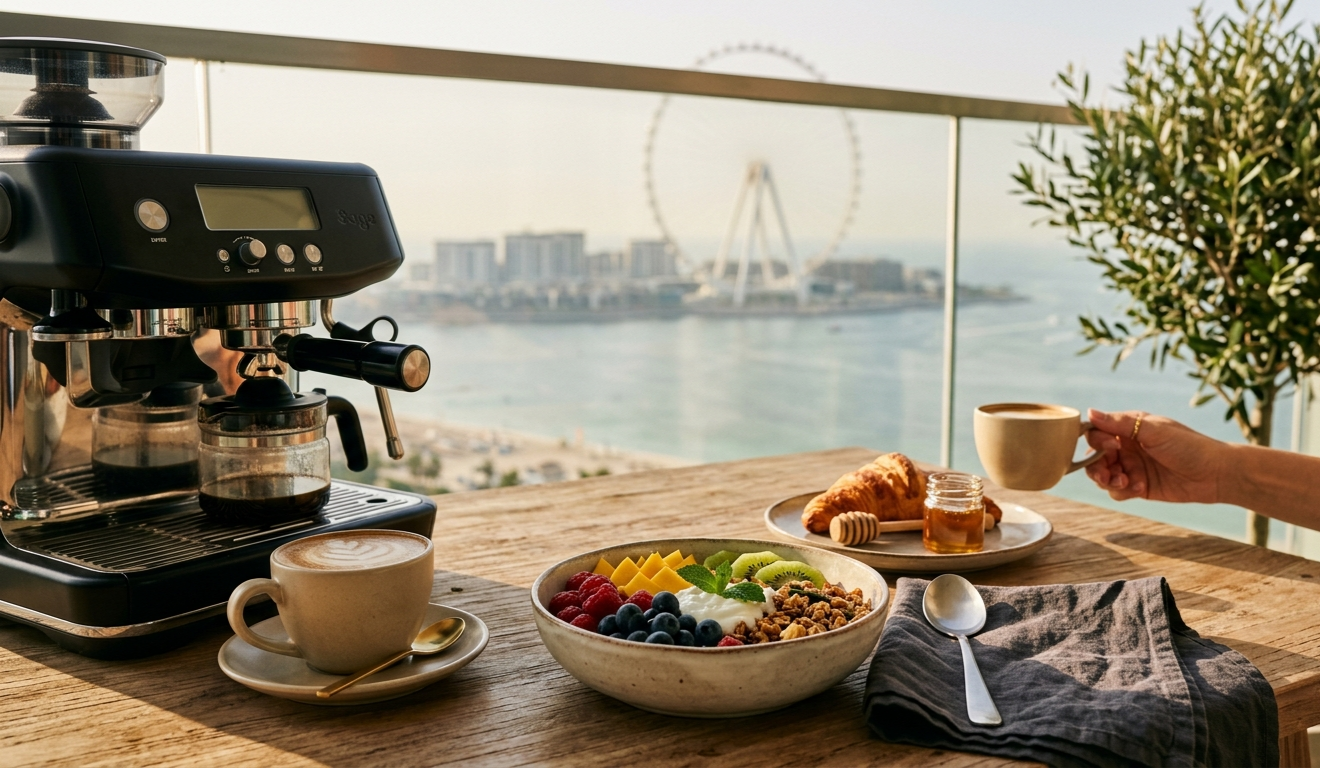
Styling on shoot day is not optional. Unlike a residential listing shoot where the owner or tenant’s existing furniture is photographed as-is, Airbnb shoots require active styling: fresh towel sets, made beds with angled-folded corners, cleared kitchen counters with one or two lifestyle props (coffee machine on, fresh fruit in a bowl), open curtains or blinds, ambient lighting on in living areas.
Detail shots are not extras they are essential. Guests booking a holiday home want to know what coffee machine is available, how large the pool is, whether there is a washing machine, what the balcony view looks like at the best time of day. These shots directly address the questions in a potential guest’s mind and reduce the uncertainty that prevents booking decisions.
Community amenity photography is as important as the unit itself. For apartments in developments like Emaar Beachfront, Palm Jumeirah towers, Dubai Marina buildings, Yas Island developments, or Downtown Dubai high-rises the pool deck, gym, lobby, and views are often the primary reason a guest chooses that location. These shots should be planned and executed with the same care as the interior.
The thumbnail image determines click rate. On Airbnb’s search grid, the first image is all a potential guest sees before deciding to click. This image needs to be the single most compelling shot from the entire property, typically a wide living room shot with a view visible, or a beautifully styled bedroom not the exterior of the building.
Timing Considerations for Airbnb Photography in UAE
Morning light is typically most flattering for east-facing units. Warm natural light enters during the first hours of the day, complementing interior warm tones.
Late afternoon light works for west-facing units and any property where the main view or balcony space faces west which in Dubai often means marina or sunset views.
Pool and outdoor amenity shots should be taken when the pool area is in use-ready condition clean, with sunbeds arranged, and during a period when the pool is not crowded with guests. Early morning before the pool opens is often the cleanest opportunity.
Twilight exterior shots of the building lit at dusk are a powerful inclusion for Airbnb listings in Dubai’s branded tower buildings and master communities.
DTCM Licence and Photography Compliance
Properties operating as holiday homes in Dubai must hold a valid DTCM (Dubai Tourism) Holiday Home licence. While the photography itself does not require specific licence compliance, photographs should not misrepresent the property in a way that would conflict with DTCM’s guest protection standards. All representations in the listing including the photography must accurately reflect what the guest will find on arrival.
→ For Airbnb and holiday home photography in Dubai and UAE, see Fotography.ae Airbnb & Short-Term Rental Photography
Property Staging Before the Shoot: The Complete Preparation System
Property staging for photography is one of the most commonly skipped steps in real estate shoots in UAE and one of the most impactful. A property that has been properly prepared for the shoot consistently produces images that outperform un-staged properties by a significant margin.
Staging does not require professional interior design or furniture rental (though both can be appropriate in some cases). It requires systematic preparation of what is already there.
The Room-by-Room Property Preparation Checklist
All rooms (general):
- All overhead lights switched on to the highest setting
- All lamps switched on (warm-toned bulbs preferred)
- All blinds and curtains fully open to maximize natural light and view
- All ceilings fans turned off (motion blur in long exposure shots)
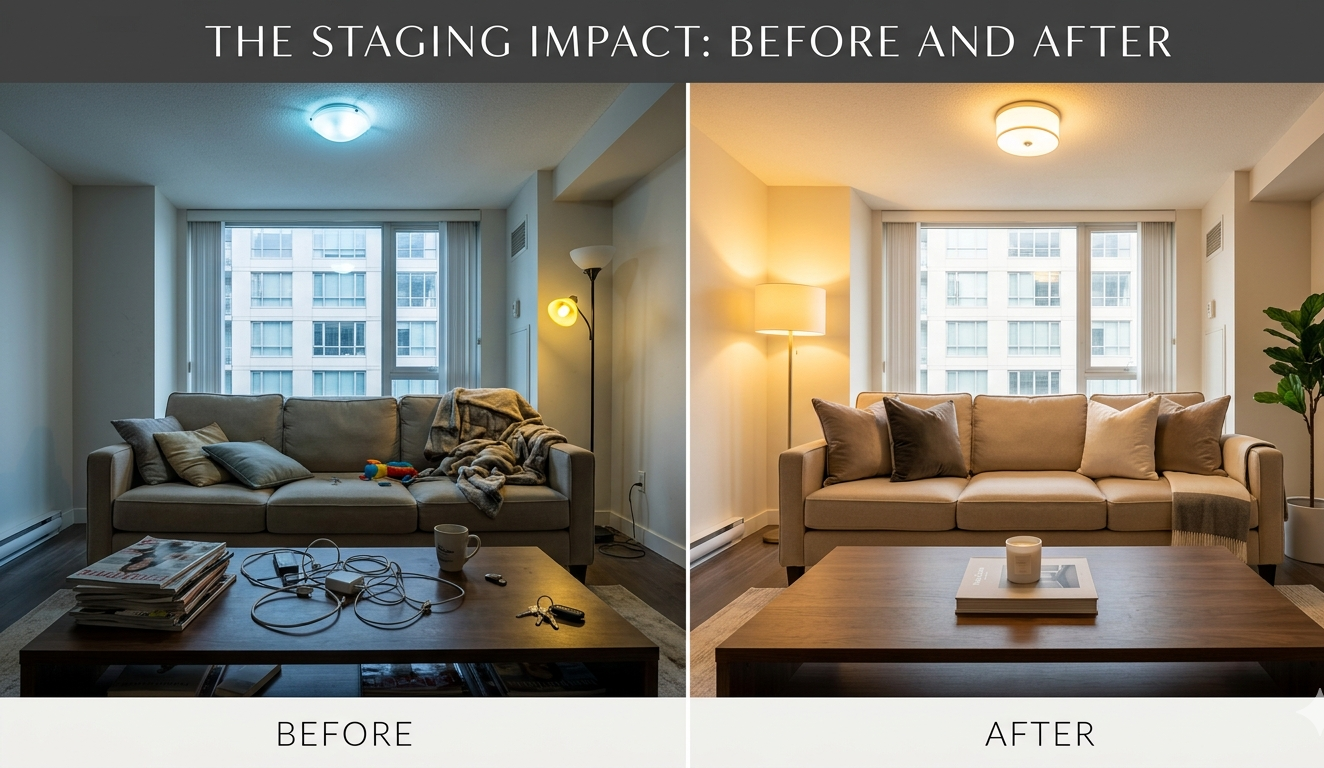
- All personal items removed: family photos, medications, toiletries on display, children’s toys
- All cables and chargers hidden or removed from view
- Floors clean and vacuumed; rugs straight and flat
- All internal doors in consistent position (all open, or all at the same angle)
Living and dining areas:
- Cushions fluffed and symmetrically arranged
- Coffee table cleared except for one or two lifestyle props (a book, a simple arrangement, a candle)
- TV switched off (black screen is visible but a logo or screensaver can be distracting)
- Dining table cleared and chairs aligned uniformly
- Any flowers or plants healthy, watered, and clean
- Fruit bowl if present fresh fruit, not overripe
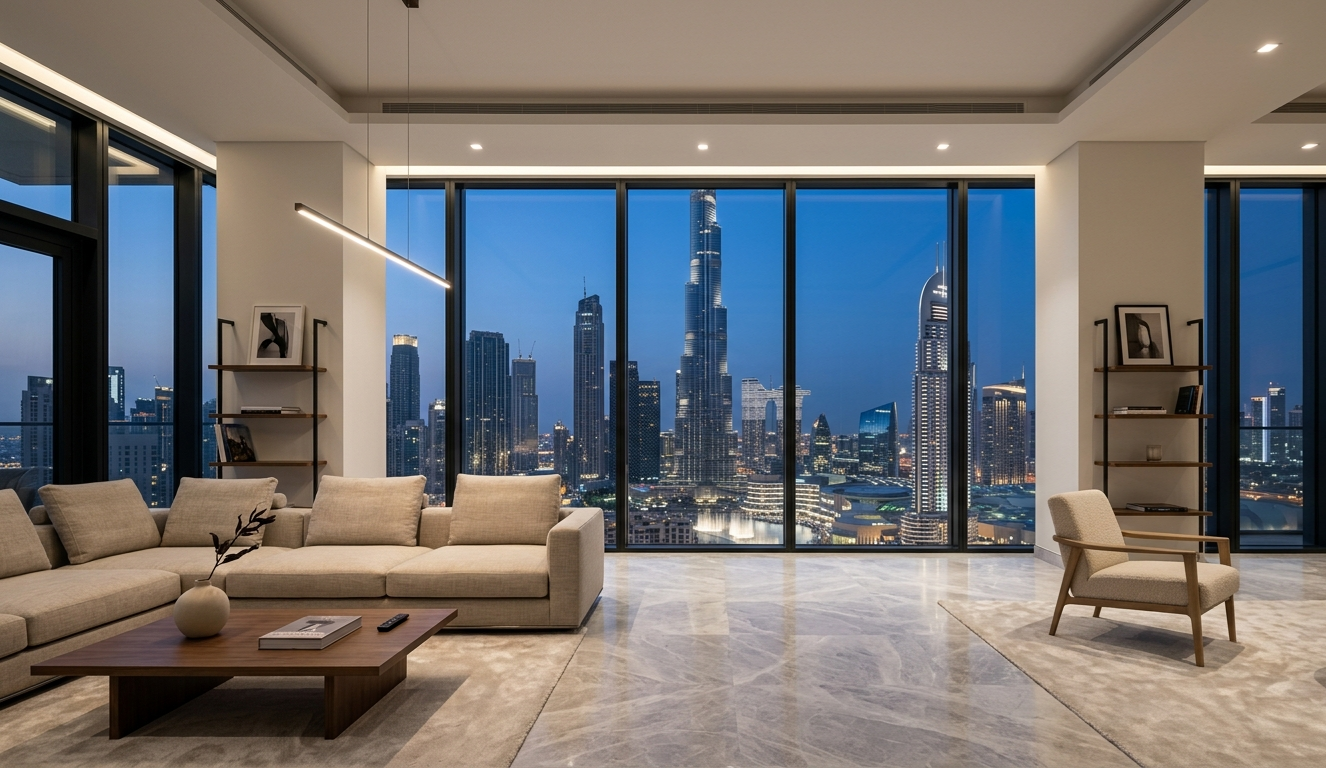
Kitchen:
- All countertops cleared except for one or two intentional props (coffee machine, fruit bowl, wine bottle)
- Sink empty and clean no dishes visible
- Bins out of sight
- Appliances wiped clean of fingerprints and grease
- Oven and microwave cleaned (visible in wide shots of kitchen)
- Inside of refrigerator photographed only if extremely well organised otherwise keep closed
Bedrooms:
- Bed freshly made with all pillows and cushions arranged symmetrically
- Bedside tables: lamp on, one book or glass of water maximum remove everything else
- Wardrobe doors closed
- Floor completely clear
- Curtains or blinds fully open
Bathrooms:
- All toiletries removed from visible surfaces
- One set of fresh, folded white towels arranged on the towel rail
- Second set of rolled towels on the vanity or shelf as a hotel-style arrangement if available
- Toilet lid closed
- Mirror cleaned no water spots
- Bin empty and clean or removed entirely from view
- Shower screen or curtain pushed to one side or fully open
Outdoor areas (balcony, terrace, garden, pool):
- All outdoor furniture cleaned and arranged symmetrically
- Balcony floor swept no leaves or debris
- Plants trimmed and healthy
- BBQ or outdoor kitchen clean and visible if a selling feature
- Pool clean no leaves or visible discolouration
- Pool area sunbeds arranged uniformly if included in shot
Mashhood’s Preparation Note
“In six years of shooting properties in UAE, the most common problem I encounter on arrival is lights. Half the bulbs in the apartment are not working, or the owner has replaced warm-white bulbs with harsh daylight LEDs in one room and warm bulbs in another. Mixed colour temperature across rooms creates post-production problems that take time to fix. I now send a prep checklist that includes ‘check every light bulb in every fitting is working and ideally the same colour temperature.’ It seems like a small thing. It changes the speed and quality of the shoot significantly.”
How to Brief a Real Estate Photographer: The Full Pre-Production Framework
The difference between an excellent real estate photography result and a mediocre one is frequently not the photographer’s skill it is the quality of the brief they were given. A complete brief allows the photographer to plan the shoot, arrive prepared, and allocate time correctly.
What a Complete Real Estate Photography Brief Includes
- Property details
- Property type: apartment, villa, townhouse, office, retail, plot
- Number of bedrooms, bathrooms, and key rooms
- Floor number and orientation (affects light planning)
- Total area (sq ft or sq m affects time allocation)
- Furnished or unfurnished
- Occupied or vacant
- Any unique features: view type, pool, garden, rooftop terrace, smart home system
- Specific deliverables required
List every format needed: standard interior photos, exterior photos, twilight shots, drone, virtual tour, walkthrough video, floor plan, virtual staging. Do not assume the photographer will include services that are not explicitly requested and agreed.
- Intended use of the images
Bayut listing? Dubizzle? Airbnb? Developer brochure? Investor presentation? Architectural portfolio? Each use case has different resolution requirements, aspect ratio preferences, and quality expectations. Defining this in the brief ensures delivery meets the platform’s technical requirements.
- Visual style reference
Provide 3–5 reference images from other property photography (can be from any market) that represent the desired aesthetic warm vs cool, lifestyle vs clean, natural vs polished. This prevents the most common post-shoot misalignment: client receives technically good photography in a style they did not expect.
- Access and logistics
- Exact address and unit number
- Parking access for the photographer (critical in Dubai high-rise communities where parking is often restricted)
- Key collection arrangements if property is vacant
- Building management access for communal areas
- Whether a tenant or owner will be present (and whether they will cooperate with staging requests)
- Timing requirements and delivery format
When is the listing going live? What is the earliest possible shoot date? What file formats, resolutions, and naming conventions are needed for delivery?
- Post-production expectations
Sky enhancement? Object removal? Virtual staging? Virtual twilight conversion? Define what is included and what is an additional scope. This prevents disputes at delivery.
Lighting in Real Estate Photography: The HDR, Flash, and Natural Light Debate
Lighting is the most technically consequential decision in real estate photography and the most debated among property photographers. Understanding the three main approaches helps clients recognize quality and evaluate portfolios correctly.
Approach 1: Natural Light Only
The photographer uses available natural light, adjusting position and timing to maximize the quality of light in each room. No artificial supplementary lighting is added.
When it works:
Properties with excellent natural light, bright units on high floors with large windows, east or west-facing rooms at the right time of day, villas with generous glazing and garden light.
When it fails:
Dark rooms, north-facing units, low floors with obstructed light, properties with small windows. Natural light alone in a dark interior produces images that look either gloomy (exposed for the interior) or blown out (exposed for the window).
Honest assessment:
Natural light-only real estate photography saves time but works well only in ideal conditions. UAE’s high-rise property market includes a significant proportion of properties where natural light alone is insufficient.
Approach 2: HDR (High Dynamic Range) Bracketed Photography
The photographer takes multiple exposures of the same frame typically 3–7 bracketed shots at different exposure values which are then merged in post-production using HDR software (Photomatix, Lightroom HDR, or manual blending).
When it works:
Well when executed subtly the interior is balanced, the windows are not blown out, and the result looks natural.
When it fails:
Over-processed HDR creates the characteristic “HDR look” artificially bright interiors, glowing edges, unnatural tones, and a plastic quality that professional buyers and agents recognise immediately as low-quality real estate photography.
Honest assessment:
HDR is the most widely used technique in UAE real estate photography. The quality range within it is enormous, from subtle professional blending that looks like natural photography, to aggressively over-processed images that actually harm the listing’s credibility.
Approach 3: Flash and Artificial Lighting (Flambient Flash + Ambient)
The photographer uses an off-camera flash or continuous LED lights to supplement and balance the natural ambient light. Images are often captured with the flash and without, and the two are blended in post-production known as the “flambient” technique.
When it works:
Consistently across all property types and lighting conditions. Dark rooms, north-facing units, and basement offices all benefit equally from flash. The result is the most consistently high-quality approach regardless of the property’s natural light.
When it fails:
Incorrect flash placement creates flat, unflattering light or visible harsh shadows. Reflective surfaces, marble floors, glass furniture, mirrors create flash hotspots if not managed carefully.
Honest assessment:
Flambient is the professional standard for consistent high-quality real estate photography. It requires more equipment, more skill, and more time per room which is why it is sometimes more expensive but it produces reliably excellent results regardless of the property’s natural conditions.
Mashhood’s Perspective on Lighting in UAE Properties
“In UAE’s high-rise market, I encounter a huge variety of light conditions in the same community. A corner unit on a high floor might be beautifully lit by natural light, while a unit on the third floor facing another building needs full flash to look acceptable. I never commit to one approach before I see the property. I arrive with equipment for all three and make the decision room by room. That flexibility is the difference between adequate and excellent results across different UAE property types.”
Twilight and Blue Hour Photography for Property Listings
Twilight photography is one of the single most effective upgrades available in real estate photography, producing images dramatically more appealing than daytime exterior shots for properties where the exterior presentation matters.
What Is Twilight Photography?
Twilight (or blue hour) photography of a property is captured in the 15–30 minutes after sunset, when the sky transitions to a deep, rich blue tone and interior lights are visible through windows. At this window, exterior ambient light and interior illumination reach a natural balance producing images where the property appears warm and inviting against a dramatic sky.
The visual effect it achieves:
Properties photographed at twilight appear more luxurious, more inviting, and more premium than the same property photographed in flat daytime light. The warm glow of lit interiors against a deep blue sky communicates that someone has a beautiful life inside.
When Twilight Photography Is Worth Including
Always worth including for:
- Villas and townhouses with exterior presence and garden
- Beachfront, marina, or waterfront properties where the evening sky and water complement each other
- Properties with rooftop terraces, pools, or outdoor entertainment areas
- Luxury and premium listings at any price bracket where the cover image needs to be exceptional
- Airbnb and holiday home listings where the “arriving at night” experience is part of the appeal
Less critical for:
- Apartments in high-rise towers (exterior twilight shots require drone)
- Properties where the exterior is behind a gate or wall with no appealing facade
- Properties where interior quality is the primary selling point and the exterior is unremarkable
Planning Twilight Shoots in UAE
The twilight window in UAE is brief and precise. The workable window for quality twilight exterior photography is typically 15–25 minutes after sunset. Earlier and the sky is too bright, washing out interior light. Later and the sky goes dark, losing the blue quality.
Sunset times in UAE vary significantly by season:
- December/January: Sunset approximately 17:45–18:00
- March/September (equinox): Sunset approximately 18:15–18:30
- June/July: Sunset approximately 19:15–19:30
All interior lights must be on and operational before sunset. The photographer cannot start the twilight exterior until conditions are correct, so all property lights, all rooms, all lamps, all feature lighting must be switched on before the window opens. This requires coordination with an on-site contact.
Virtual twilight conversion is an alternative for properties where a separate twilight visit is not practical; a daytime exterior image is edited in post-production to simulate the twilight effect. When executed well, virtual twilight is convincing and significantly less expensive than a physical twilight shoot. The honest limitation: very high quality daytime images produce convincing virtual twilight; mediocre daytime images produce artificial-looking results.
Drone and Aerial Photography for Real Estate in UAE
Aerial photography transforms how a property is understood, revealing its footprint, its plot, its relationship to surrounding landscape, and the views available from the property in a way that no ground-based photography can achieve.
What Drone Photography Adds to a Real Estate Listing
Plot and garden scale:
Aerial photography is the only way to communicate the actual scale of a villa plot, a garden, or a compound. Ground-level photography systematically understates outdoor space aerial footage shows it truthfully.
View direction and quality:
For high-floor apartments, the view is often the most valuable single feature. Aerial footage from the direction of the window approaching the building at the apartment’s floor level communicates what the resident actually sees in a way that interior photography pointing at a window cannot.
Location and connectivity:
Aerial footage contextualizes the property in its neighbourhood proximity to beach, marina, downtown, or key amenities. For international buyers making location decisions remotely, this context is valuable.
Community context:
For off-plan and master community developments, aerial footage communicates the scale and quality of the community, not just the individual unit.
DCAA Drone Permit Requirements in UAE
All commercial drone operations in UAE require a permit from the Dubai Civil Aviation Authority (DCAA). This applies to real estate photography aerial footage commissioned for property marketing is commercial use.
Key permit facts:
- DCAA permit application must be submitted minimum 7–14 working days before the intended flight
- The drone pilot must hold a DCAA-recognized Remote Pilot Certificate
- No-fly zones cover: 5km radius around all UAE airports, military areas, and certain central urban areas including parts of central Dubai
- Specific areas of Dubai including Palm Jumeirah, Downtown Dubai, and Marina areas have additional restrictions requiring specific coordination
Important note for agents and clients: Not all photographers offering drone services in UAE are operating with DCAA permits. Unpermitted drone operations are illegal and carry significant penalties including confiscation of equipment and fines. Always confirm that your drone photographer operates with a valid DCAA permit. Fotography.ae coordinates DCAA permits for all shoots with drone components.
Lead time planning: Any property shoot requiring drone footage must be booked with a minimum 14-day lead time to allow permit processing.
Best Drone Angles for Different Property Types
| Property Type | Most Useful Drone Angles |
| Villa with garden | Top-down overhead (shows full plot), oblique at 45° (shows facade + garden), low approach along driveway |
| Beachfront apartment | Approach from the sea facing the building, elevated view of the beach and building together |
| Townhouse in community | Bird’s eye of the row and surrounding community, low angle approach to the unit |
| Penthouse | Eye-level at balcony height from outside, wide panoramic of the view direction |
| Off-plan development | Master community overhead, phased development progress documentation |
Virtual Tours and 3D Property Walkthroughs: Matterport and Beyond
3D virtual tours allow prospective buyers, tenants, or guests to explore a property interactively moving from room to room, examining specific details, and experiencing the spatial flow of the property without physically visiting.
In UAE’s property market, where a large proportion of buyers and renters are making decisions from overseas or across the country, virtual tours have moved from a premium add-on to an expected standard for any serious property marketing effort.
What Matterport Is and How It Works
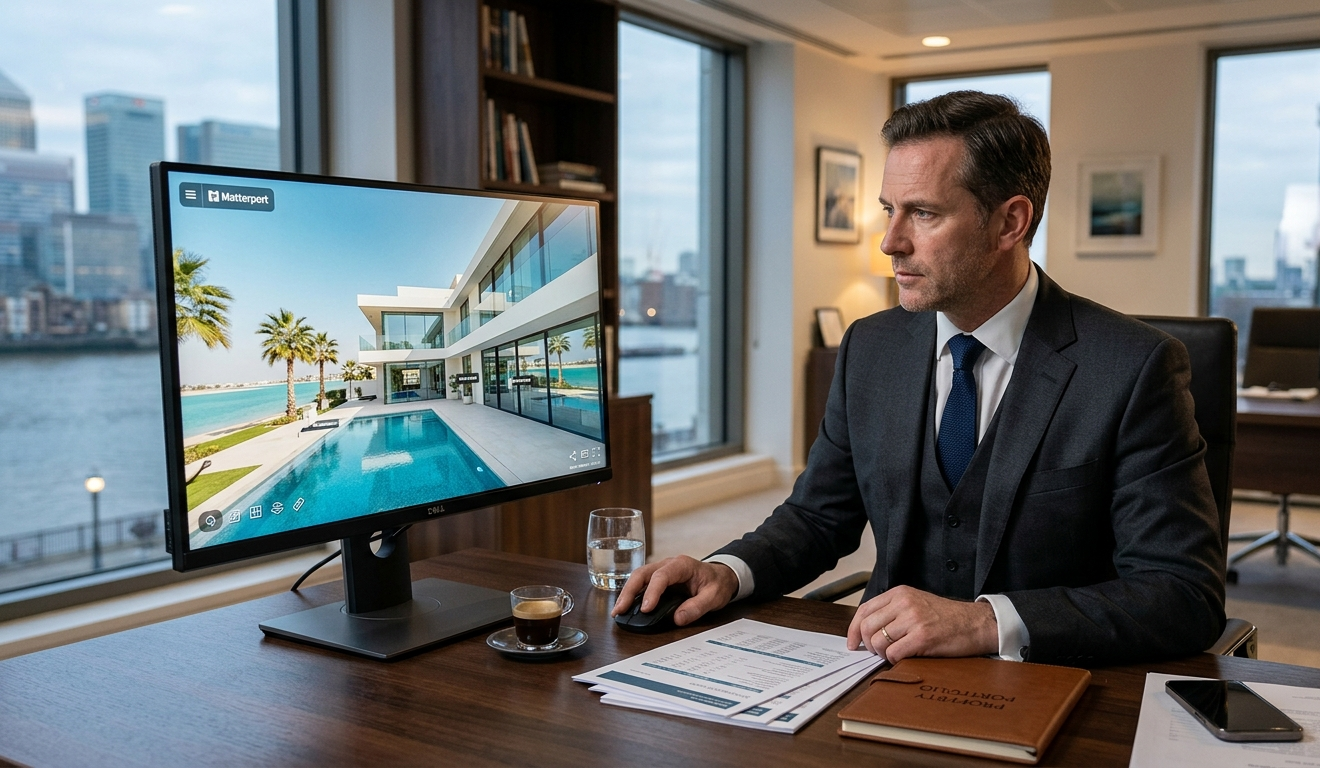
Matterport is the market-leading 3D virtual tour platform. A specialized 3D camera (Matterport Pro2 or Pro3) scans the property using infrared depth-sensing and 4K photography, creating a complete spatial model of the interior.
The result is:
- An interactive 3D walkthrough viewable in a browser or VR headset
- A “dollhouse view” showing the entire floor plan as a 3D model from above
- A 2D floor plan generated from the scan data
- Individual 360° panoramas from any scan position
Matterport hosting: Matterport tours are hosted on Matterport’s servers. Ongoing hosting fees apply after the initial production period. Clients should be aware of this when commissioning the tour requires active hosting to remain accessible.
When Virtual Tours Are Most Valuable
Highest value for:
- Properties marketed to international buyers and investors not currently in UAE
- Large or complex properties where spatial flow is difficult to communicate through static photographs
- Show apartments for off-plan developments (allows international sales without physical visits)
- Holiday home and Airbnb listings (guests want to know exactly what they are booking)
- High-value properties where the cost of the tour is a small fraction of the transaction value
Lower additional value for:
- Small studios or one-bedroom apartments where the layout is immediately evident from photographs
- Properties where the owner explicitly prefers not to have the layout publicly accessible
- Properties where the photo quality is the primary weakness (a virtual tour of a poorly staged property is a virtual tour of a poorly staged property)
Alternatives to Matterport
360° panoramas: Individual 360° room photographs linked together in a web viewer. Less immersive than Matterport’s continuous 3D model but significantly less expensive. Suitable for budget-conscious listings where the primary benefit is showing all angles of each room.
Video walkthrough: As covered in Section 4, a well-produced video walkthrough communicates flow and scale effectively and is sometimes preferred over Matterport for listings where cinematic quality is more important than interactivity.
iGUIDE: An alternative 3D tour platform with accurate floor plan generation. Less market presence than Matterport in UAE but occasionally used by specific agencies and developers.
Floor Plans for Real Estate Listings: Types, Uses, and When They Matter
Floor plans are the most consistently undervalued element of property marketing in UAE and one of the most practically important for serious buyers making purchase decisions.
Why Floor Plans Matter
A photograph shows what a room looks like. A floor plan shows how all the rooms relate to each other. For buyers evaluating whether a property will accommodate their lifestyle how the children’s bedrooms relate to the master, whether the kitchen opens to the dining space, where the storage is, how circulation works, a floor plan is irreplaceable.
Properties with floor plans consistently receive more qualified inquiries than those without. A buyer who has reviewed a floor plan and is still interested has already confirmed the layout works for them reducing time-wasting viewings.
Types of Floor Plans for Real Estate
2D schematic floor plan: A simple line drawing showing room boundaries, dimensions, door and window positions, and room labels. The standard floor plan format for listing platforms. Generated either from existing architectural drawings (most accurate) or from on-site measurement.
Furnished 2D floor plan: Same as the schematic but with furniture shown in a standardized illustration style. Helps buyers visualize how the space can be used. Commonly used in developer marketing and premium listing presentations.
3D floor plan: A bird’s-eye-view rendered perspective of the floor plan showing the property with interior detail at an oblique angle. More visually engaging than a 2D plan and useful in brochures and developer marketing materials.
Matterport-generated floor plan: A floor plan generated automatically from a Matterport 3D scan. Provides dimensions and room layout from the scan data. Not RERA-compliant as a measured drawing but useful as a marketing tool and spatial reference.
Floor Plans and RERA in UAE
RERA (Real Estate Regulatory Agency) in Dubai requires that real estate advertisements include accurate property information including size. Floor plans as marketing materials must not misrepresent the property’s layout or dimensions. Using a floor plan from a different unit type or from an outdated version of the building plan is a compliance risk.
Virtual Staging: When It Works and When It Misleads
Virtual staging is the digital addition of furniture, décor, and styling to photographs of empty or sparsely furnished properties using 3D rendering software. It has become a common tool in UAE real estate photography particularly for vacant investment properties and off-plan launches.
What Virtual Staging Does Well
- Makes empty properties feel liveable and emotionally appealing rather than clinical and cold
- Communicates scale (an empty room with no furniture reference is harder to interpret in photographs)
- Demonstrates different use possibilities (a large empty room styled as a master bedroom, or alternatively as a home office)
- Produces listing-ready images from vacant properties without the cost of physical furniture rental or interior design
- Allows multiple styling versions of the same space for A/B testing or different buyer audiences
What Virtual Staging Cannot Do
- Fix structural issues with the space (oddly shaped rooms, blocked windows, poor light remain apparent)
- Substitute for physical staging when the property is occupied and will be viewed in person the discrepancy between the photography and the physical property is immediately apparent at viewing and damages trust
- Guarantee quality low-quality virtual staging with unrealistic lighting, wrong-scale furniture, or unconvincing rendering is worse than no staging at all. The “obviously CGI furniture” look signals an amateur production that reflects poorly on the listing.
Virtual Staging Ethics and Disclosure in UAE
Properties must be disclosed as virtually staged. On Bayut, Dubizzle, and Property Finder, listings using virtually staged images should indicate this clearly — typically by labelling the images as “Virtually Staged.” The reason is both ethical and practical: buyers who view a property expecting the furniture shown in photos and arrive to an empty space feel misled. That trust breach affects the agent’s credibility, not just the listing.
Off-Plan Developer Photography and CGI Integration
Off-plan property marketing in UAE is a globally significant sector. Emaar, Damac, Nakheel, Aldar, Sobha, Meraas, and dozens of other developers collectively market billions of dirhams of off-plan property at any given moment.
Photography for off-plan developments operates in a unique context where physical production and CGI/render integration must work together seamlessly.
The Off-Plan Photography Lifecycle
Stage 1:
Pre-construction launch: No physical property exists yet. Marketing uses CGI renders, architectural visualizations, community masterplan drone footage of the site, and sometimes lifestyle photography of the developer’s brand and target lifestyle shot at existing completed properties or in appropriate lifestyle contexts.
Stage 2:
Construction progress documentation: Regular photography of construction progress typically monthly or quarterly for investor reports, marketing updates, and regulatory compliance. Shot from consistent angles over time to show progression. Often includes drone documentation from fixed positions.
Stage 3:
Show apartment and sales centre photography: The show apartment is a fully furnished, professionally styled unit (often a unit type representative of the development) used as the primary physical sales tool. Photography of the show apartment is among the highest-value real estate photography commissions in UAE it will be used across all marketing channels for the life of the development’s sales programme.
Stage 4:
Completion and handover photography: Photography of the completed development architectural photography of the building exterior, community photography of landscaping and amenities, and documentation photography of unit types for RERA registration and marketing updates.
CGI Integration and Photography Consistency
For off-plan developments where CGI renders are the primary visual assets and photography is being produced for lifestyle or brand purposes, maintaining visual consistency between CGI and photography is critical. This requires:
- A defined visual standard (colour tone, lighting quality, perspective approach) agreed before any production begins
- Photography that matches the CGI’s warmth or coolness, its aspirational aesthetic, and its lifestyle framing
- Post-production colour grading that bridges CGI and photographic imagery into a consistent visual system
Real Estate Photography for Property Portals: Bayut, Dubizzle, Airbnb, and Booking.com Standards
Each property portal in UAE has different technical standards, user behaviour patterns, and optimal image practices. Understanding these makes the difference between photography that performs on a platform and photography that technically meets the minimum upload requirement.
Bayut and Property Finder
Bayut and Property Finder are UAE’s dominant residential property portals. Their search results show a thumbnail image, a price, and the key specs (beds, baths, size) before a user clicks through.
What performs on Bayut/Property Finder:
- Bright, clean, wide-angle interior shot as the cover (living room or kitchen preferred)
- 15–25 images per listing covering all rooms, exterior, and view
- Landscape (horizontal) orientation portal image display is landscape
- Minimum 2500px width for high-resolution display
- HDR or flash-balanced exposure the flat, dark “smartphone in a corner” images that still appear on these platforms are immediately visible as inferior to professional listings
Image order matters: Bayut’s algorithm and user behaviour indicate that listings with the living room or most appealing space as the first image outperform those that lead with the exterior or less appealing rooms. Always discuss the recommended image sequence with your photographer or agent.
Dubizzle
Dubizzle serves a broader market segment than Bayut, including both sale and rental listings across all price points. The same image quality principles apply to professional photography consistently outperforms amateur photography but the visual standard required for mid-market listings is somewhat more flexible than the premium tier.
Airbnb
Airbnb’s platform is heavily optimised for the cover image. The thumbnail in search results is a landscape crop of the first image. The properties that consistently achieve high occupancy on Airbnb in UAE share a common characteristic: a compelling cover image that communicates warmth, quality, and a sense of space.
Airbnb-specific technical standards:
- Minimum 1024px on the shortest side (higher is better)
- Landscape format preferred for cover image
- Airbnb’s compression algorithm rewards well-exposed, high-contrast images heavily edited or over-processed images degrade after compression
- Airbnb allows up to 100 images use a minimum of 20 for any full property, covering all rooms, all views, and all amenity areas
Booking.com
Booking.com is increasingly important in UAE’s short-term rental market particularly for holiday homes competing with hotel inventory. Booking.com places heavy weight on image quantity and quality in its property ranking algorithm. Properties with more high-quality images consistently rank higher in search results.
Booking.com standards:
- Minimum 1280 x 960px resolution
- Landscape orientation for all main images
- At least one image of every room type and amenity
- Exterior and entrance images required
Post-Production in Real Estate Photography: What Professional Editing Actually Does
Post-production is where raw captures from a real estate shoot become listing-ready images. It is also the phase most frequently misunderstood by clients particularly around what is included at standard editing level versus what constitutes additional scope.
Standard Real Estate Photography Editing
Exposure correction and balancing: Interior and window exposures are balanced so interiors are well-lit and windows show the view without blowing out. This is the primary technical challenge in interior photography and the most time-consuming edit.
White balance correction:
Colour temperature is consistent across all rooms neutralizing the blue-green cast of fluorescent lights, the orange cast of warm incandescent bulbs, and the blue cast of daylight in shadowed areas.
Vertical and horizontal correction: Camera tilt and wide-angle lens distortion corrected so vertical lines (walls, door frames, windows) are perfectly straight. This is the single most visible indicator of professional vs amateur real estate photography.
Colour enhancement:
Saturation and colour response adjusted to make the property look vibrant and appealing without looking artificial.
Noise reduction:
Applied to shadow areas where digital noise is visible, particularly in high-ISO interior captures.
Basic object removal:
Minor distractions: a light switch sticker, a visible power cable that couldn’t be hidden on set, a small object left in frame removed as part of standard editing.
What Is Additional Scope (Beyond Standard Editing)
Sky replacement: Replacing a dull or overcast sky with a more appealing sky in exterior shots. Standard practice in professional real estate photography should be agreed in the brief.
Virtual twilight conversion: Converting a daytime exterior to a simulated twilight effect. Additional scope and pricing.
Virtual staging: Adding furniture to empty rooms digitally. Significantly more work than standard editing time and cost should be agreed before the shoot.
Extensive object removal: Removing permanent fixtures (a structural column, a water tank visible on the roof, cars in a driveway) from images using compositing. Time-intensive and priced separately.
Green lawn enhancement: Dry or dead grass in gardens common in UAE’s dry climate digitally replaced with healthy green grass. Standard practice for listing marketing; should be disclosed if used.
Pool water colour enhancement: Pale or greenish pool water adjusted to a clear, inviting blue. Standard for pool-facing and pool-area photography.
Delivery Formats for Real Estate Photography
| Use Case | Recommended Format |
| Bayut / Property Finder / Dubizzle | JPEG, sRGB, minimum 2500px wide |
| Airbnb / Booking.com | JPEG, sRGB, minimum 2000px wide |
| Print brochure / developer marketing | TIFF or high-res JPEG, 300dpi |
| Social media posts | JPEG, sRGB, square or 4:5 crop |
| Agent website | JPEG, sRGB, 1500–2500px |
Freelancer vs. Agency for Real Estate Photography in UAE and GCC
The decision between a freelance real estate photographer and a full-service production company in UAE is a function of volume, complexity, and what you actually need not simply a quality or prestige decision.
When a Freelance Real Estate Photographer Is the Right Choice
Best suited for:
- Individual agents and brokers with regular listing photography needs
- Property owners photographing a single listing for sale or Airbnb
- Small and medium agencies with regular volume but not in-house photography capability
- Any project where direct communication with the photographer is important
- Projects where fast turnaround and scheduling flexibility are valued
Key advantages:
- The photographer you brief is the photographer who shows up. No variation in operator quality.
- Faster scheduling and rescheduling
- Lower overhead costs translate directly to better pricing
- Direct relationship allows accumulated knowledge of the agent’s preferences and style over time
When an Agency or Full-Service Company Is the Right Choice
Best suited for:
- Large developer photography programmes requiring multiple simultaneous operators
- Multi-city or multi-development projects requiring coordinated production management
- Large-scale Airbnb management companies with 50+ properties needing regular cycling photography
- Projects requiring a full production team stylist, lighting technician, drone operator, floor plan surveyor on a single commission
The Fotography.ae Model
Fotography.ae, led by Mashhood Arshad, operates as a senior specialist with 6+ years of accumulated knowledge of UAE’s property market, its platforms, its lighting conditions, and its visual standards delivering agency-level results with the scheduling flexibility, direct communication, and pricing efficiency of a specialist freelancer.
For larger projects requiring additional crew (drone operator, virtual tour specialist, floor plan surveyor), a trusted production network is coordinated as required without the agency overhead that drives up cost without driving up quality.
Decision Summary
| Requirement | Freelancer | Agency |
| Single property listing | ✓ Ideal | Expensive |
| Regular agent (10–30 listings/month) | ✓ Ideal with standing brief | Possible |
| Large developer programme (50+ units) | With network | ✓ Better fit |
| Direct communication | ✓ Direct | Account manager layer |
| Fast turnaround (<48 hours) | ✓ Faster | Slower layers |
| Budget under AED 5,000 | ✓ Best fit | Hard to scope |
| Multi-location simultaneous | With network | ✓ Better fit |
| Drone, Matterport, floor plan combined | ✓ Coordinated | Also appropriate |
UAE & GCC Real Estate Photography and Videography Pricing Guide
Important note: The figures below reflect current 2025 UAE and GCC market rates. Pricing varies based on property size, deliverable scope, post-production requirements, and logistics. These figures are for planning purposes. For a specific quote aligned to your property, contact Fotography.ae directly.
Real Estate Photography Pricing (UAE Market 2025)
| Service | Freelancer Range (AED) | Agency Range (AED) |
| Studio / 1BR apartment (up to 600 sq ft) | 400–800 | 900–2,000 |
| 2–3BR apartment (600–1,500 sq ft) | 700–1,400 | 1,500–3,500 |
| 4BR+ / large apartment (1,500–3,000 sq ft) | 1,200–2,200 | 2,500–5,000 |
| 3–4BR villa / townhouse | 1,500–3,000 | 3,500–7,000 |
| 5BR+ luxury villa | 2,500–5,000 | 5,500–14,000 |
| Commercial office / retail (per unit) | 800–2,000 | 2,000–5,000 |
| Show apartment (full developer standard) | 2,500–6,000 | 6,000–16,000 |
| Airbnb / holiday home (standard) | 600–1,400 | 1,500–3,500 |
| Twilight shoot (add-on to standard) | 600–1,500 | 1,500–3,500 |
| Drone photography (add-on) | 900–2,500 | 2,500–7,000 |
Real Estate Videography Pricing (UAE Market 2025)
| Service | Freelancer Range (AED) | Agency Range (AED) |
| Property walkthrough video (90 sec) | 1,200–2,800 | 3,000–7,000 |
| Cinematic property film (2–3 min) | 3,500–8,000 | 9,000–25,000 |
| Social media reels package (3–5 clips) | 1,500–3,500 | 4,000–10,000 |
| Combined photo + walkthrough video | 2,000–4,500 | 5,000–12,000 |
| Developer launch film (3–5 min) | 8,000–20,000 | 20,000–60,000 |
| Aerial drone video (add-on) | 1,500–4,000 | 4,000–10,000 |
Additional Services Pricing (UAE Market 2025)
| Service | Range (AED) |
| Matterport 3D virtual tour (per unit) | 800–2,000 |
| 2D floor plan (measured, per unit) | 400–900 |
| 3D floor plan (rendered) | 800–1,800 |
| Virtual staging (per room) | 250–500 |
| Virtual twilight conversion (per image) | 150–350 |
| Sky replacement (per image, if not included) | 80–200 |
What Drives Cost Up for Real Estate Photography
- Properties larger than 3,000 sq ft (additional rooms and time)
- Occupied properties requiring extensive on-site staging coordination
- Properties with difficult access or parking logistics
- Rush delivery under 24 hours (add 30–50%)
- Mixed-use or complex properties requiring both residential and commercial approaches
- Drone shoots requiring DCAA permit processing (add lead time and permit fee)
- Twilight shoots requiring a second trip to the property
- Properties requiring extensive virtual staging (empty investment units)
What Reduces Cost for Real Estate Photography
- Property fully prepared before arrival (saves setup time significantly)
- Clear brief submitted in advance (no on-set scope discussions)
- Standard delivery timeline (48–72 hours)
- Batch shoots: multiple properties in one day or session
- Single decision-maker for approvals
- Access and parking arranged in advance
Permits and Access Requirements for Real Estate Photography in UAE
Real estate photography in UAE involves a range of access and permit considerations that differ significantly from most other markets.
Building Access for Photography
High-rise residential buildings in Dubai: Photography in privately managed residential towers (common in Dubai Marina, JLT, Downtown, Business Bay, Palm Jumeirah) typically requires building management approval for access to communal areas lobby, pool, gym, and amenity spaces. Individual unit photography does not require building permission as long as access is granted by the unit owner or tenant.
DIFC and Dubai Media City: Photography within the DIFC (Dubai International Financial Centre) for commercial purposes requires DIFC Authority approval. Similarly, Dubai Media City and some other free zone areas have specific photography policies for commercial production.
Master community developments (Emaar, Nakheel, Aldar): Community area photography pool decks, beaches, parks, and street-level community spaces in gated master communities often requires prior approval from the community management. For developers, this approval is typically managed through the marketing team. For agents, approval should be sought before shoot day.
Drone Permits for Real Estate
As covered in Section 11, all commercial drone operations require DCAA permit. In UAE’s real estate context:
- Villa communities and suburban areas generally have fewer airspace restrictions and are more straightforward to permit than central urban areas
- Palm Jumeirah has specific airspace considerations always confirm with DCAA before planning drone coverage
- Downtown Dubai and the Burj Khalifa area are restricted airspace drone photography is not permitted in central Downtown without specific coordination
- Abu Dhabi: The Abu Dhabi Aviation Authority (GCAA) oversees drone permits in Abu Dhabi. Permit requirements and no-fly zones differ from Dubai’s DCAA framework
Tenant Occupied Properties
When a property being photographed is occupied by a tenant:
- The landlord or agent must obtain tenant cooperation and schedule the shoot with adequate notice (typically minimum 24 hours notice is required by UAE tenancy law for property access)
- The photographer has no legal authority to request a tenant move or remove personal belongings this must be pre-arranged with the tenant
- Photography of personal items, faces, or identifying documents visible in a property is ethically problematic and should be avoided or post-production removed
Common Mistakes That Ruin Real Estate Photography
These are the most consistently observed failure points in real estate photography across UAE drawn from 6+ years of direct production experience.
Mistake 1:
Shooting at the Wrong Time of Day
Visiting a property at 1:00 PM because it’s convenient produces a different result than visiting at the optimal natural light window for that unit’s orientation. Confirming the property’s orientation and choosing the shoot time based on when natural light is most favourable is part of professional pre-production not something to improvise on the day.
Mistake 2:
Unprepared Property on Shoot Day
The single most common cause of wasted shoot time and sub-standard results is arriving at a property that has not been staged. Lights out, cables visible, personal items on surfaces, unwashed dishes in the sink. A one-page preparation checklist sent to the owner or tenant 48 hours before the shoot eliminates this problem. Fotography.ae provides this checklist to every client before every property shoot.
Mistake 3:
Crooked Verticals
Slightly tilted wide-angle images where the walls and window frames lean inward or outward are the most visible marker of unprofessional real estate photography. This is corrected through both careful on-site framing and post-production lens correction. If you see a portfolio where the walls lean, look for a different photographer.
Mistake 4:
Over-Processed HDR with the Characteristic “Glow”
The telltale signs of over-processed HDR real estate images glowing highlights, halos around furniture, plastic skin tones on people, unnaturally even lighting that removes all shadow and depth are immediately recognizable to any experienced buyer or agent. This style of processing actually harms a listing’s credibility rather than helping it.
Mistake 5:
Drone Without a DCAA Permit
This is a legal compliance issue, not just a quality issue. Any real estate photography company or freelancer operating drones commercially in the UAE without DCAA permits is operating illegally. Always confirm permit status with your drone photographer.
Mistake 6:
Forgetting the View
In UAE’s property market, the view is often the most important selling feature particularly for high-floor apartments. Photographs that consistently shoot away from the windows, or that leave the view blown out and white, are leaving the property’s most valuable asset out of the listing. The view should be represented at its best facing the window, at golden hour where possible, showing the specific destination visible.
Mistake 7:
Too Few Images on the Listing
Bayut and Property Finder allow up to 30+ images per listing. Airbnb allows 100. Listings with fewer than 10 images consistently underperform compared to listings with 20+. Every room should have at least one image. Key features should have detail shots. The view should have multiple images at different times of day where possible.
Mistake 8:
Using the Same Images for Different Platforms Without Optimization
A landscape wide-angle interior photograph works perfectly on Bayut’s listing page. The same image used without cropping as an Instagram post is a poor composition that likely breaks JPEG compression quality visibly. Images should be exported and optimized for each platform’s specific technical requirements.
Mistake 9:
Skipping the Floor Plan
Properties without floor plans receive fewer qualified inquiries. Floor plans should be considered a standard inclusion for any serious listing not an optional extra.
Mistake 10:
Not Disclosing Virtual Staging
As covered in Section 14, virtually staged images must be identified as such. Buyers who view a property expecting to see the furniture from the photographs and arrive to an empty unit feel misled. This perception affects the agent’s and owner’s credibility, not just the listing’s.
Mashhood Arshad’s Field Notes: Real Lessons from Property Shoots in UAE
These are first-person observations from 6+ years of real estate photography production across UAE and GCC practical field intelligence that does not appear in any generic real estate photography guide.
On orientation and timing:
“The biggest variable in property photography in Dubai is orientation, specifically whether the main windows face east or west. I ask this before I agree on a shoot time. A west-facing Marina apartment at 2 PM looks completely different from the same unit at 6 PM. When I shoot it at 2 PM, the light is behind the camera, the windows are bright, and the interior is reasonable. When I shoot it at 6 PM, the warm afternoon light pours in at a beautiful angle and the Marina outside turns golden. They’re the same property and the difference in the photographs is enormous.”
On occupied vs vacant properties: “Vacant is not automatically easier than occupied. An empty property echoes, looks cold, and has no furniture to establish scale or warmth. An occupied property has staging challenges but also has warmth and scale. I find that occupied properties with a prepared owner produce my best listing work All I need to do is photograph what they’ve created. An empty property almost always requires virtual staging or at minimum some strategic prop placement to communicate scale and livability.”
On agents who skip the floor plan: “I’ve had agents tell me floor plans are not worth the cost. I understand the cost pressure but I also know from experience that buyers at every price level want to know how the space works before they commit to a viewing. A viewing is time. The agent’s time, the buyer’s time, the owner’s time. A floor plan pre-qualifies the viewing. You’re not sending people to see a property that doesn’t match their spatial needs. The floor plan is a time-saving investment for everyone in the transaction.”
On Dubai’s dust issue: “This is something that nobody outside of UAE knows until they work here: dust. After a sandstorm or a period of dry weather, the exterior of any building in UAE is coated in a fine layer of desert dust that photographs terribly particularly on dark or reflective exterior finishes. For exterior shots after a dusty period, morning right after rainfall (which happens occasionally in UAE winter months) is ideal. For villas and properties where the landscaping is visible, dry dead grass in summer is another reality that usually requires post-production or the decision to plant the shoot in the cooler months. These are UAE-specific realities that matter for planning.”
On Airbnb cover images: “I’ve analysed my Airbnb clients’ booking rates before and after photoshoots consistently. The single variable that moves the needle most is the cover image. Not the total number of images. Not the quality of secondary images. The cover image. I spend more time getting the cover image right, the right room, the right angle, the right light than any other single shot in an Airbnb shoot. It is the thumbnail that the algorithm shows in search results and it is the one image that determines whether a potential guest clicks or scrolls.”
The Complete Real Estate Shoot Checklist
For the Client / Property Owner / Agent
5–7 Days Before:
- Confirm scope: photo only, or photo + video + drone + Matterport + floor plan
- Book Fotography.ae confirm date, time, and property access
- Begin DCAA drone permit application if drone is required (14+ days lead time)
- Check orientation of main windows confirm optimal shoot time with photographer
- Arrange DTCM/holiday home permit documentation if Airbnb listing (for your records)
48 Hours Before:
- Send Property Preparation Checklist (Section 7) to owner, tenant, or property manager
- Confirm parking access for photographer at the building
- Confirm key collection arrangement if property is vacant
- Confirm building management approval for communal area photography if required
- Confirm all interior lights are functional and bulbs are consistent colour temperature
- Arrange fresh flowers, fruit, or lifestyle props if desired
Day Before:
- Owner/tenant confirms property is prepared
- Confirm any last-minute access or building management updates
- Confirm twilight shoot logistics if applicable (who will be on-site to manage lights at dusk)
Day of Shoot:
- Property prepared and all rooms accessible before photographer arrives
- All lights switched on in all rooms before photographer arrives
- All blinds and curtains open
- All personal items cleared from surfaces
- Owner or agent point of contact available by phone during shoot
- Communal areas cleared with building management if applicable
Post-Production:
- Confirm delivery timeline and format requirements in writing
- Single point of contact for feedback and approval
- Consolidated feedback submitted in one communication
- Images approved in writing before archiving as complete
- Images uploaded to platforms in optimal sequence (best image first on every platform)
Frequently Asked Questions
Structured to answer every search query and conversational AI query related to real estate photography and videography in UAE and GCC.
What is real estate photography?
Real estate photography is the professional capture of properties residential, commercial, or hospitality to present them in their most accurate and appealing form for sale, rental, or marketing. It includes still photography, video walkthroughs, drone aerial photography, 3D virtual tours, floor plans, and virtual staging. Professional real estate photography consistently produces better listing performance than amateur or smartphone photography in every measurable metric.
Why is professional real estate photography important in the UAE?
UAE’s property market has an unusually high proportion of international buyers and tenants making decisions remotely often without physically visiting the property before committing. In this context, the visual presentation of a property is frequently the primary decision-making tool. Properties with professional photography on Bayut, Dubizzle, and Airbnb consistently receive more views, more inquiries, and faster transactions than comparable listings with amateur photography.
What does a real estate photographer do?
A real estate photographer arrives at the property, assesses the light conditions, stages each room in coordination with the owner or agent, photographs every room and outdoor space using professional wide-angle lenses and tripod-mounted cameras, and delivers edited images that balance interior exposure with window views, correct lens distortion, and present the property at its best. Professional real estate photographers also coordinate drone operations, virtual tours, and video production for comprehensive property marketing packages.
What is the difference between real estate photography and architectural photography?
Real estate photography is primarily a marketing tool; its goal is to attract buyers, renters, or guests by presenting the property appealingly. Architectural photography is primarily a documentary and portfolio tool; its goal is to represent the design intent and material quality of the architecture for the benefit of architects, designers, and design publications. The techniques and compositions differ accordingly.
Planning and Timing
What time of day is best for real estate photography?
The best time of day depends on the property’s orientation. East-facing properties photograph best in the morning when sunlight enters from the east. West-facing properties photograph best in the late afternoon. North-facing properties receive no direct sun and should be photographed during overcast conditions or with supplementary flash to balance interior and exterior. Always discuss orientation with your photographer before confirming the shoot time.
How should I prepare my property before the photographer arrives?
The full preparation checklist is in Section 7 of this guide. Key priorities: all lights switched on, all blinds and curtains fully open, all personal items cleared from visible surfaces, beds freshly made, bathrooms with clean white towels and no toiletries on display, kitchen counters cleared, floors clean. The photographer will do final adjustments on site, but the core preparation must be done before arrival.
How long does a real estate photography shoot take?
A standard 2-bedroom apartment takes approximately 60–90 minutes on site. A 3-bedroom apartment or townhouse takes 2–3 hours. A large villa with multiple outdoor areas may take 3–5 hours. These times assume the property is fully prepared before the photographer arrives. An unprepared property can add 30–60 minutes to any shoot.
Can I be present during the real estate photography shoot?
Yes. The agent or property owner being present is often helpful for access management, to answer questions about features, and to make styling decisions. However, photographers work best without pressure. Trust the photographer’s judgment on which angles and compositions to use; they have production experience that informs these decisions.
Services and Formats
What is a Matterport virtual tour? Matterport is a 3D virtual tour platform that uses a specialized camera to scan a property and create an interactive digital model. Viewers can navigate from room to room in a web browser or VR headset, view the property from a bird’s-eye “dollhouse” perspective, and explore specific details at 360° from any scan position. Matterport tours are particularly valuable for properties being marketed to international buyers or tenants who cannot physically visit.
What is twilight real estate photography?
Twilight photography is exterior property photography taken in the 15–30 minutes after sunset when the sky transitions to a deep blue and interior lights are visible through windows. The resulting images show the property glowing warmly against a dramatic sky, communicating luxury and desirability in a way that daytime exterior photography cannot achieve. Twilight photography is recommended for any premium property listing where the exterior presentation is an important selling point.
Do I need a drone for my property listing?
Not for every listing. Drone photography adds the most value for villas and townhouses with gardens or plots, beachfront and waterfront properties where the water relationship is a selling point, properties where the view from the unit is a key feature, and developer projects where community scale is important. For standard apartments in high-rise buildings, drone exterior footage of the facade is often less valuable than strong interior photography, unless the rooftop pool or location is a specific selling point.
What is virtual staging?
Virtual staging is the digital addition of furniture and décor to photographs of empty or unfurnished properties using 3D rendering software. It makes vacant properties appear furnished and liveable, helps buyers visualize the space’s potential, and is significantly less expensive than physically renting and placing furniture. Virtual staging is effective when executed at a professional quality level and must be disclosed as such in all property listings.
What is a property walkthrough video?
A property walkthrough video is a smooth, gimbal-stabilized video camera movement through the property room by room, following the natural flow from entrance through all main spaces. It typically runs 90 seconds to 3 minutes and provides prospective buyers or tenants with a more realistic sense of the spatial flow and scale of the property than still photographs alone can convey.
Pricing and Budgets
How much does real estate photography cost in the UAE?
Professional real estate photography in the UAE costs approximately AED 400–800 for a studio or 1-bedroom apartment with a specialist freelancer, AED 700–1,400 for a 2–3 bedroom apartment, and AED 1,500–3,000 for a villa or townhouse. Luxury villas and show apartments range from AED 2,500–6,000 depending on property size and post-production scope. Agency rates are typically 2–3× higher across all categories.
How much does an Airbnb photoshoot cost in Dubai?
Airbnb photography in Dubai with a specialist freelancer costs approximately AED 600–1,400 for a standard apartment, including all interior rooms, outdoor areas, and community amenities where accessible. Premium Airbnb photography packages including twilight exterior shots, drone footage, and detail photography range from AED 2,000–4,000.
What is included in real estate photography pricing?
Standard real estate photography pricing from Fotography.ae includes pre-production consultation, on-site production time, professional editing of all delivered images (exposure balancing, colour correction, vertical correction, sky enhancement), and delivery in web-ready format. Drone photography, Matterport virtual tours, floor plans, video production, twilight shoots, and virtual staging are each quoted separately.
Is real estate photography worth the cost?
For any property being listed at market rate or above in UAE, the return on professional photography is consistently positive. For a property listed at AED 1,000,000, a photography investment of AED 800 represents 0.08% of the listing price and is likely to produce a faster sale and potentially a higher offer price through improved listing performance. The cost-benefit ratio is more favourable in real estate photography than in almost any other marketing investment.
Platforms and Technical Questions
What photo format and resolution is required for Bayut listings?
Bayut recommends a minimum of 1,200 x 900 pixels, with higher resolution (2,500px+ wide) recommended for display quality. JPEG format, sRGB colour space, landscape (horizontal) orientation. Fotography.ae delivers all listing photography pre-optimized for UAE’s major property portals.
What resolution does Airbnb require for photos?
Airbnb requires a minimum of 1024px on the short side. Professional real estate photography delivers at significantly higher resolution than this minimum, which improves display quality and compression performance on the platform.
How many photos should a property listing have?
For Bayut and Property Finder: 15–25 images covering all rooms, exterior, and view. For Airbnb: 20–50 images covering all rooms, all views, all amenities, and lifestyle details. More images (up to the platform maximum) generally outperform fewer images when the additional images are quality shots, not duplicates or poorly composed extras.
UAE and GCC Specific
Do I need a permit for drone photography of my property in Dubai?
Commercial drone photography, including for real estate marketing requires a DCAA permit in Dubai. This applies to any aerial footage used for commercial purposes, including property listings. Fotography.ae coordinates DCAA permits for all drone shoots and requires a minimum 14-day booking for any shoot with aerial components.
Can Fotography.ae photograph properties outside Dubai?
Yes. Fotography.ae covers real estate photography across UAE including Abu Dhabi, Sharjah, Ras Al Khaimah, Ajman, Fujairah, and Umm Al Quwain. GCC coverage including Saudi Arabia and Qatar is available with appropriate travel logistics.
What types of properties does Fotography.ae photograph in UAE?
Fotography.ae photographs all residential property types (apartments, villas, townhouses, penthouses, studios), commercial properties (offices, retail, warehouses), developer show apartments and off-plan marketing, Airbnb and short-term rental properties, and hospitality properties including hotels, hotel apartments, and serviced residences.
How does Fotography.ae handle Airbnb photography for property managers with multiple units?
Fotography.ae offers ongoing photography programmes for Airbnb property managers and holiday home operators with multiple units including standardized visual approaches across all units, batch scheduling to minimize per-unit cost, and rapid delivery to keep listing content current. Contact Fotography.ae directly to discuss a programme suited to your portfolio size and frequency requirements.
About Fotography.ae & Mashhood Arshad
Fotography.ae is a UAE-based professional photography and videography practice led by Mashhood Arshad a specialist in real estate, automotive, corporate, and commercial visual production with over 6 years of hands-on experience across UAE and GCC property markets.
Real estate photography and videography experience includes:
- Residential listing photography across Dubai’s primary market communities Downtown, Marina, Palm Jumeirah, Business Bay, JLT, Emaar Beachfront, Arabian Ranches, and more
- Luxury villa and penthouse photography in Dubai’s premium tier
- Airbnb and holiday home photography across Dubai’s leading short-term rental communities
- Show apartment photography for off-plan developments
- Commercial property documentation for real estate agencies and brokers
- Construction progress photography for development documentation
- Architectural photography for interior design and development portfolios
Services available: Interior and exterior listing photography, luxury and premium property photography, twilight photography, drone aerial photography (DCAA permitted), Matterport 3D virtual tours, property walkthrough and cinematic video, social media reels, floor plans, virtual staging coordination, Airbnb and short-term rental photography, off-plan and show apartment photography.
Geographic coverage: Dubai, Abu Dhabi, Sharjah, Ras Al Khaimah, and across the UAE. GCC coverage including Saudi Arabia, Qatar, and Bahrain with appropriate travel logistics.
→ For real estate photography and videography inquiries, visit Fotography.ae
Final Takeaway
In the UAE’s property market, where international buyers make decisions based on digital presentations, where portal thumbnail images determine whether a listing receives viewings, and where the gap between a well-presented property and a poorly presented one can be measured in time on market and offer price, professional real estate photography is not an optional expense. It is a fundamental component of the listing itself. The properties that move fastest in the UAE market are rarely the ones with the lowest price. They are the ones that look best before anyone has stepped inside them.
Every successful property photograph is not a lucky shot. It is the result of the right brief, the right preparation, the right timing, and a photographer who arrived knowing exactly what needed to be captured and why.
Guide maintained and updated by Fotography.ae. For the latest information on services, pricing, and availability, contact directly at Fotography.ae. All pricing ranges reflect UAE market data as of 2025. GCC pricing varies by market and project scope.